

Introduction
In India, internet access is primarily limited to rural areas, reflecting the challenges we face as a society. The digital divide in rural education, the gap in access to devices, internet and digital skills between rural and urban students, is one of the biggest barriers to equal learning in India. Although the education system strives to provide better education quality, bridging the knowledge and skill gap remains difficult due to the digital divide.
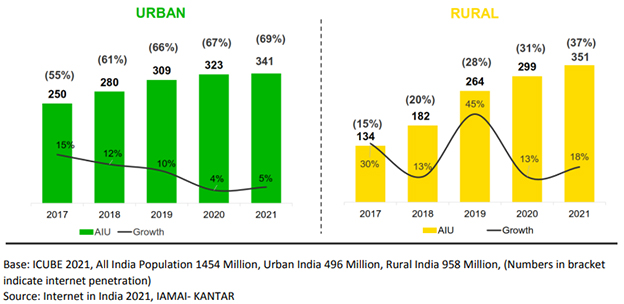
Source: IAMAI KANTAR Report
The report by IAMAI-KANTAR, titled Internet of India, highlights a significant rise in Internet users across the country. However, as shown in the chart, there is still a noticeable gap between urban and rural regions in internet access. Urban areas show 69% internet usage, while rural areas are at only 37%, reflecting the ongoing ‘digital divide.’
A deeper look at this matter reveals another aspect, which is the gender divide. India has more male internet users than females, with similar gender disparities in both urban and rural areas.
Challenges and Barriers to Digital Access
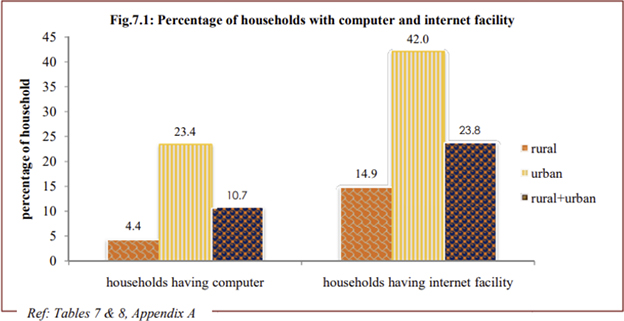
Source: mospi.gov.in
As shown in the statistics above, only 4% of rural households own a computer, compared to 23% in urban areas. This stark gap highlights a critical lack of digital awareness in rural communities, where many parents and local leaders have limited familiarity with digital tools. This lack of understanding limits support for integrating technology, particularly in schools.
As a result, rural schools and students face significant barriers in accessing essential learning technology, which impacts educational opportunities and digital literacy for the next generation.
Why Rural Schools Struggle to Adopt Technology
Lack of Financial Support
Schools in rural areas often receive limited government funding, due to which they face:
- Difficulties in maintaining adequate infrastructure or building digital classrooms.
- Limited or no internet connectivity, making online learning difficult or even impossible.
- Outdated hardware, like old computers, that cannot support modern educational software or access current online resources.
Many such schools also lack exposure to investors due to limited resources, so they rely on trusted NBFCs for financial support to bridge these gaps.
Grants and CSR help, but they don’t reach every school. Where a rural school needs to buy devices, set up a computer lab or get connectivity, a school loan for technology can fund the upfront cost and be repaid over time, turning a one-time barrier into a manageable plan.
Lack of Awareness and Digital Literacy
- Many students and teachers in rural areas need more knowledge of how to use technology effectively for learning.
- Due to a lack of proper infrastructure and awareness, most of these schools find it difficult to provide digital education.
With proper training and awareness, they can experience the full benefits of digital tools, widening the educational gap between rural and urban areas.
Affordability Issues
- Socioeconomic factors make it hard for rural families to afford essential devices like laptops or tablets.
- Even if schools manage to buy these devices, paying for reliable internet plans is often beyond their means, limiting access to online education.
These challenges highlight the urgent need to improve technology access in rural schools so that all students have the opportunity to succeed in today’s digital world.
Consequences of the Divide on Students: Why It Matters
The digital divide presents significant challenges for rural students, especially regarding technology in rural schools. Limited access to technology and the internet means these students often miss out on essential educational resources and online learning opportunities.
This gap restricts their exposure to crucial 21st-century skills needed for future careers. Consequently, the achievement gap between rural and urban students continues to widen, leaving rural learners at a disadvantage.
Addressing the digital divide and improving technology in rural schools is crucial for ensuring that all students have equal opportunities to succeed and thrive in today’s digital world.
Building Bridges: Strategies for Equitable Access
Bridging the digital divide in rural education is essential to ensure that all students have equal access to learning opportunities.
Let’s discuss the strategies one by one:
1. Government Initiatives:
Governments can play a crucial role by expanding infrastructure in rural areas and providing funding programs to offer subsidized devices to students. These efforts help ensure that students in remote areas have the essential tools they need to succeed.
2. Public-Private Partnerships:
Collaborations between tech companies and educational institutions can bring innovative solutions to affordable private schools in rural areas. These partnerships can provide resources like devices, software, and training programs, making technology more accessible to rural students.
3. Community-Based Solutions:
Local communities can create essential technologies like Wi-Fi networks, mobile learning vans, digital community centers, etc. These solutions ensure that students without home internet access can still participate in online learning.
4. Digital Literacy Training:
Educators in rural areas need professional development to integrate technology into their teaching effectively. Training programs focused on digital literacy can empower teachers to use new tools and resources in the classroom.
By implementing these strategies, we can create a more equitable education system where all students, regardless of location, have the chance to thrive in the digital age.

How Schools Can Bridge the Digital Divide
Bridging the digital divide in rural areas requires a collaborative effort to ensure equal access to technology for all. Here are the roles of each member in the society to address this issue effectively:
1. Educators:
Teachers play a crucial role in integrating technology into the classroom and ensuring that all students benefit from digital resources.
Around 30% of teachers have integrated digital tools into their classrooms in both rural and urban areas, but more awareness and training programs are needed to develop skilled educators.
2. Investors:
NBFCs like Varthana offer school loans designed for exactly this, helping rural and low-income schools invest in digital classrooms and infrastructure without waiting years to self-fund.
The number of digital classrooms in such rural areas is likely to increase by 37.77% in 2025 with NBFC’s initiative towards creating a robust educational infrastructure.
3. Policymakers:
Policymakers are vital in advancing education, especially in rural areas. Yet, as of 2023, only 15% of rural schools had internet access, highlighting the ongoing digital divide.
Hence, government leaders or policymakers need to prioritize funding and create policies like PM E-vidya that support technology access in rural education.
4. Parents:
Active parental involvement in education, especially in ensuring kids have internet access, is important for improving reading and writing skills at home.
The Education 4.0 initiative highlights that enhancing digital skills in families is crucial for bridging educational gaps in rural areas.
5. Community:
Local communities can create shared resources, such as Wi-Fi hotspots and device programs, to support students without access.
This collaborative approach helps students without personal devices access digital resources and encourages community-driven solutions.
Continued advocacy and support from all these groups are essential to achieving equal access to technology in affordable private schools in rural areas. By working together, we can ensure that every student, regardless of location, has the opportunity to thrive in today’s digital world.
Success Stories: Inspiration and Impact
Rural schools and communities are finding innovative ways to bridge the digital divide, making technology in rural schools more accessible and effective.
Here are some inspiring examples of rural schools and communities in India successfully bridging the digital divide:
1. Digital Empowerment Foundation (DEF) in Baran, Rajasthan:
- What they did: Set up Community Information Resource Centers (CIRCs) to provide digital literacy training.
- Impact: Improved digital skills and access to information for students and villagers.
2. Ekal Vidyalaya in Jharkhand:
- What they did: Introduced solar-powered tablets and digital content in local languages.
- Impact: Enhanced learning experiences and increased student engagement.
3. Project Nanhi Kali in Maharashtra:
- What they did: Provided digital learning tools and resources to underprivileged girls.
- Impact: Boosted academic performance and confidence among students.
These initiatives have had a positive impact on student learning and engagement:
Enhanced Digital Skills
Students gained essential digital literacy skills, preparing them for future opportunities.
Increased Engagement
Access to technology made learning more interactive and engaging.
Equal Opportunities
Bridging the digital divide helped provide equal educational opportunities for rural students.
These examples show that with the right resources and support, rural schools in India can overcome the digital divide and significantly improve student outcomes.
Funding Technology for Rural Schools
As this blog shows, the first barrier to digital access in rural education is usually money, not willingness. Devices, computer labs, connectivity and teacher training all cost more than many rural and low-income schools can find in a single year’s budget.
What closing the gap usually costs
- Computers, tablets and classroom devices
- Internet connectivity and basic IT infrastructure
- A functioning computer lab or digital learning space
- Teacher training to use the technology well
How rural schools can fund it
Grants, CSR partnerships and government schemes reach some schools but not all. Where they fall short, a school loan can cover the upfront cost of technology and infrastructure, repaid over time, so a rural school can give students digital access now rather than waiting for funding that may never arrive.
How Varthana helps
Varthana works with affordable private schools across India, including in rural areas, to fund classroom technology and infrastructure. Schools can check school loan eligibility and use the school loan calculator to plan how financing a digital upgrade fits their budget.
Equal access to technology shouldn’t depend on where a school is. For many rural schools, sensible financing is one of the most practical ways to make that access real.
Conclusion
Bridging the digital divide in rural education is essential for ensuring equal opportunities for all students. By implementing strategies such as government initiatives, public-private partnerships, and community-based solutions, we can provide rural schools with the technology they need to thrive. Success stories like those from the Digital Empowerment Foundation, Ekal Vidyalaya, and Project Nanhi Kali show that with the right resources, rural education can improve significantly.
To make this a reality, educational-focused finance companies like Varthana are crucial. Varthana offers financial support to affordable private schools, providing quick loan processing and flexible repayment options, helping bring technology to rural students and empowering them for success in the digital world.
Bridging the digital divide takes awareness, training and partnerships, and, for the hardware and connectivity, funding. The section above outlines how rural schools can finance technology access.
Frequently Asked Questions
-
Q1. What is the digital divide in rural education?
The digital divide in rural education is the gap in access to technology, devices, internet and digital skills, between rural and urban students. In India, rural schools often lack computers, connectivity and trained teachers, which limits learning opportunities. -
Q2. Why do rural schools struggle to adopt technology?
The main barriers are lack of financial support, limited or no internet connectivity, outdated or absent hardware, and low digital literacy among teachers and students. Funding is usually the first and biggest obstacle. -
Q3. How can the digital divide in rural schools be bridged?
Through a mix of government initiatives, public-private partnerships, community solutions, teacher training in digital skills, and funding for devices and connectivity. Successful programs combine infrastructure with ongoing support. -
Q4. How can rural schools afford technology and internet access?
Schools typically combine grants, CSR partnerships and government schemes, and where those fall short, external financing such as a school loan for technology. This funds devices, labs and connectivity upfront, repaid over time. -
Q5. Can a school take a loan to set up a computer lab or digital classroom?
School loans are generally used for purposes such as technology, infrastructure and expansion, and eligibility depends on the lender. NBFCs like Varthana work with rural and affordable private schools; check the school loan page for current details.




Social