

A science fair isn’t only about taking home trophies, it’s about showing what young minds can dream up. A simple science experiment working model helps students see theories come to life, something they can touch, build, and observe. Some science experiments give them the opportunity to connect what they learn in class with how things actually work in the real world. The ideas that follow highlight the ten best experiments for science exhibition that are easy to build, light on cost, and big on imagination, that celebrate curiosity more than complexity.
Why Hands-On Experiments Matter?
Experiential learning classifies products as having lower cognitive demands. The Department of Education states that students utilizing hands-on activities are able to recall concepts over 40% more than students who do not. Education Week (2023) described students who performed pretend play activities within a science class as having a greater retention of the material and increased confidence in STEM.
The INSPIRE Awards – MANAK program sponsored by the Department of Science and Technology in India has inspired students to create great science experiment projects using inexpensive materials.
At Varthana, we observed how well low-cost private institutions perform when teachers improvise using rudimentary science experiments and inexpensive materials. Integrating science, which can be observed and manipulated in a tangible way, fosters curiosity and a habit of inquiry. Using simple working models for science exhibitions in classrooms makes these concepts hands-on and easy to understand for students.
1. Hydraulic Lift
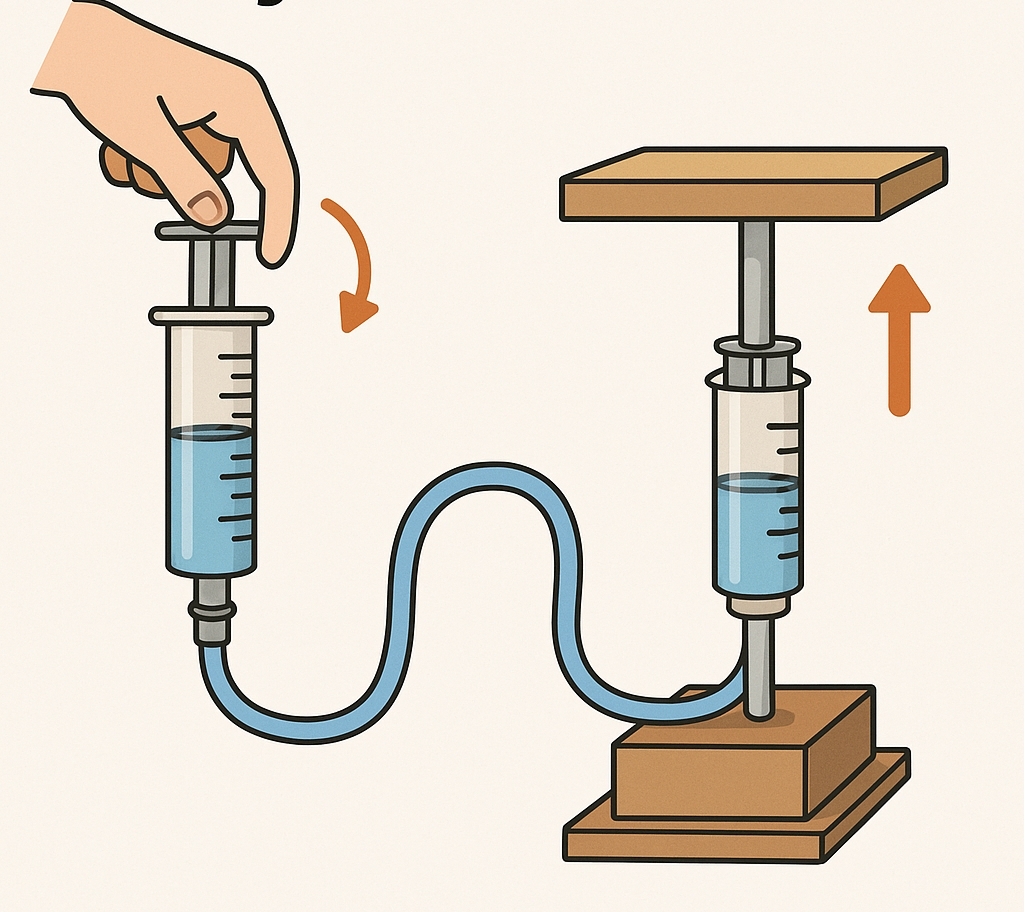
The hydraulic lift is one of the best science experiments using Pascal’s Law, one can understand hydromechanics. An introductory experiment in hydraulic engineering is the construction of a hydraulic lift. For this, one can connect two simple plastic syringes with a tube filled with water. When one syringe is pressed, the other is also pressed with equal force, raising a rectangular cardboard platform located at the other end.
It is a simple and inexpensive science experiments working model that costs only ₹50-₹60. For this, one can understand how hydraulic systems operate in automated systems, including brakes in cars and elevators. This science experiment for high school allows one to learn mechanical engineering by applying basic scientific concepts, which is why this is one of the more popular projects in school.
2. Solar Water Heater
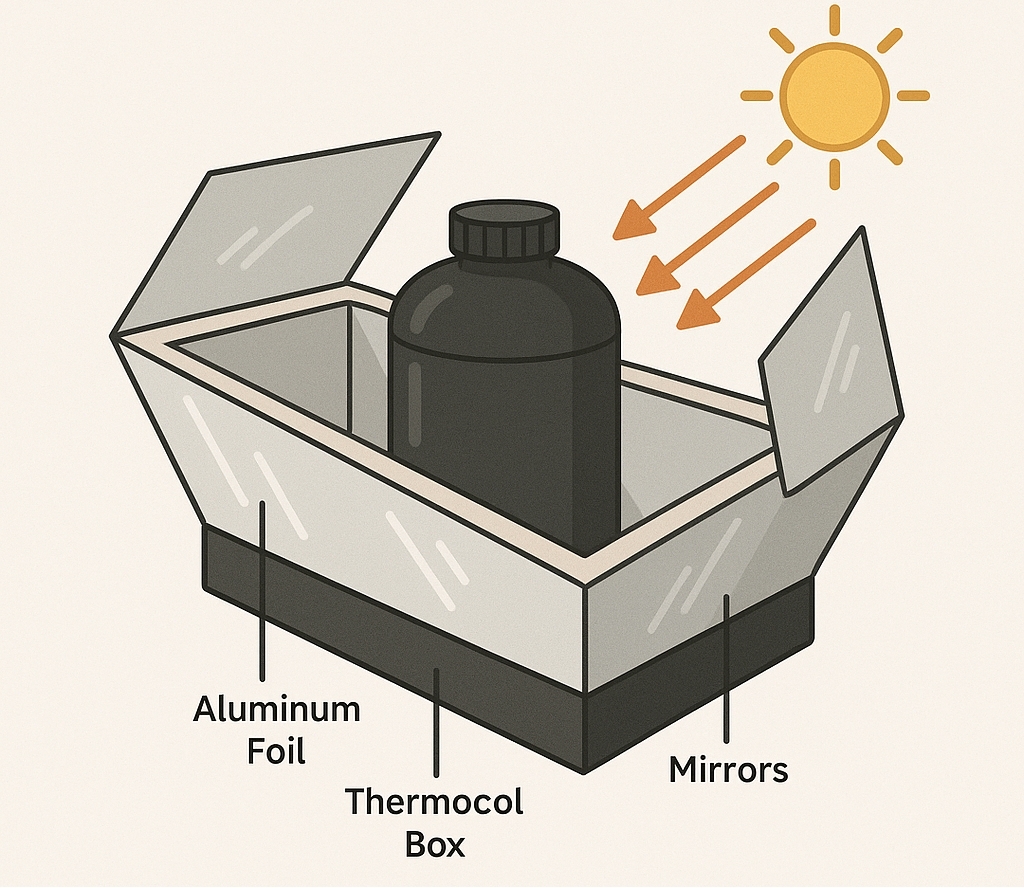
In science experiments for high school, a student can make a solar water heater and do other useful, simple science experiments. To demonstrate how sunlight can be transformed into heat, the student can take a black plastic water container and a thermocol box. The student can then cover the box with aluminum foil and wrap mirrors around it, painting it black in the process. After this, the student can demonstrate heat absorption by placing it in the sun. During heat reflection, the water in the container will warm up.
These wonderful scientific endeavors, costing around ₹70-₹80 for the materials, are one of the most cost-efficient science experiment ideas for students, beautifully bridging the gap between physics and environmental science. It showcases the use of renewable energy in daily activities and living positively toward the environment.
3. Air Pollution Absorber
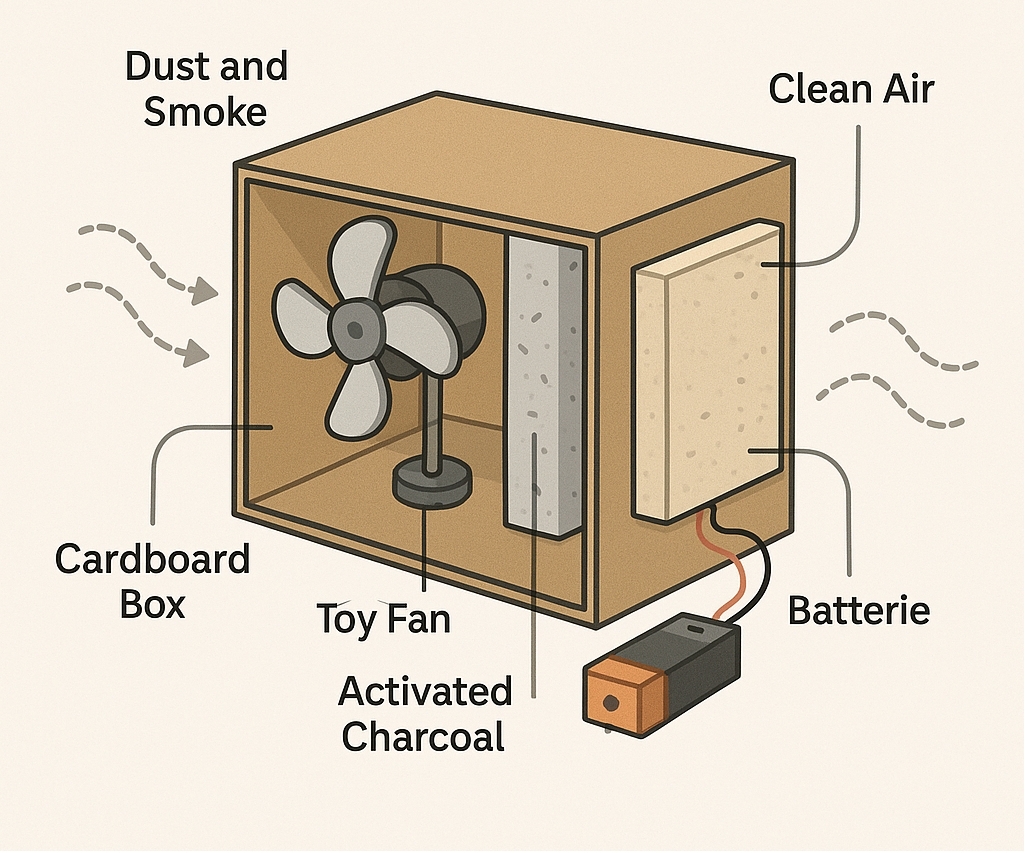
Pollution Absorber is a must-do basic science experiment that deals with real-life problems concerning the environment. Students can demonstrate how air purifiers eliminate dust and smoke in the atmosphere by creating a simple cardboard box with a mini motor or toy fan, sponge, activated charcoal, and battery-powered circuitry to create a dust-capturing mini air purifier.
This simple, fun science experiment, an inexpensive science project priced around ₹100, inspires students to think about air filter and air purifier technology, and innovative ways to tackle urban pollution, making it cleaner and more manageable. It is simple to do, impactful, and most importantly, pertinent to the problems that our environment is facing in the face of globalization.
4. Water Filtration System

As a simple science experiment, a water filtration system demonstrates how filtration and sedimentation techniques are useful in cleaning water. For a natural water filter, students can split a plastic bottle in half, and then layer different materials: gravel, sand, charcoal, and cotton in each half. When dirty water is poured in, it filters through all of them, and below, clean water drips out.
This basic and inexpensive science experiment, costing around ₹40 to ₹50, illustrates how natural filtration systems and groundwater work. It is among the most useful science fair project ideas for school exhibition projects aimed at developing science and environmental awareness in students.
5. Wind Energy Turbine
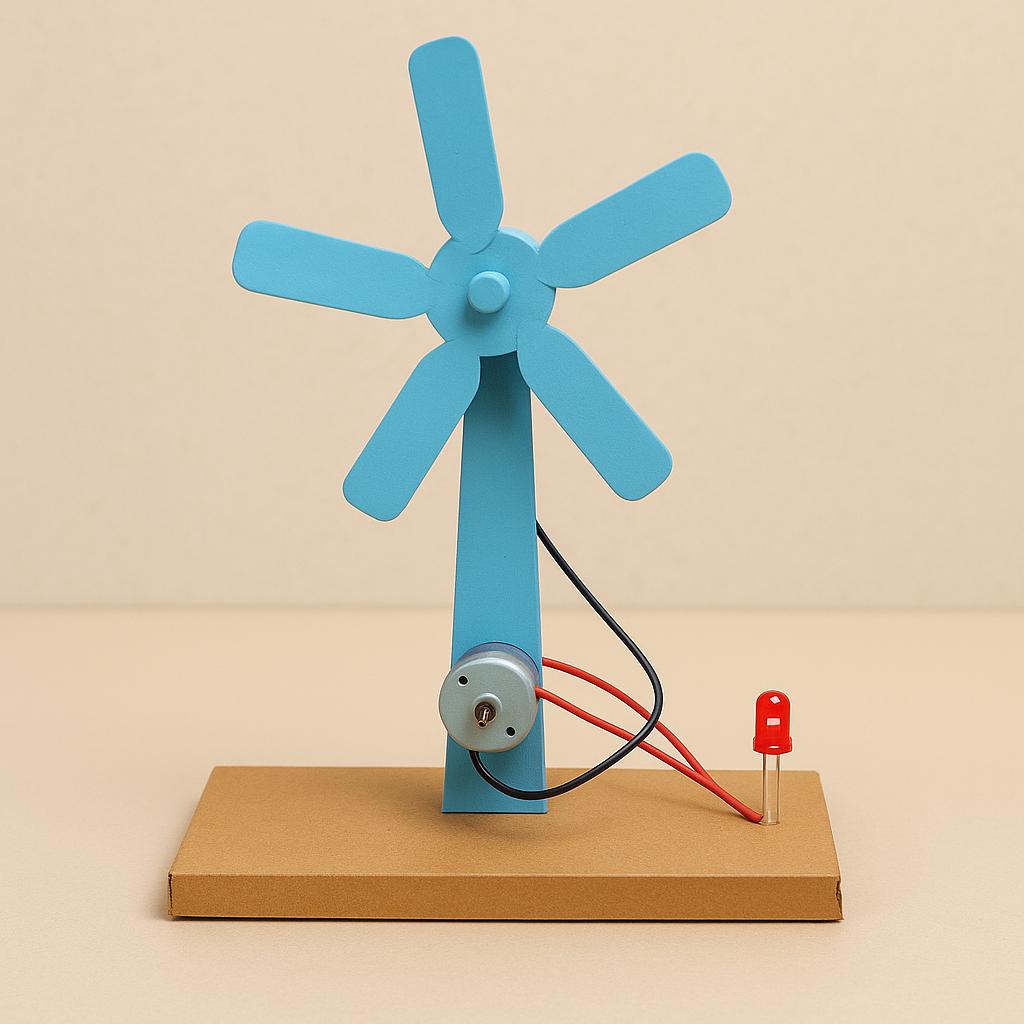
The wind energy turbine is a great science experiment working model for a science experiment because it shows how kinetic energy can be turned into electrical energy. Connecting a small LED bulb to a toy motor and fan blades will help students show how moving air spins the blades, which turns the motor, which makes electricity, and lights the bulb.
A motor, fan blades, an LED, wires, and a cardboard base cost about ₹90 to ₹100. This project uses pictures to show how energy is converted and how renewable power works. It’s one of the best experiments for science exhibition themes focused on sustainability and clean energy, an easy school science project ideas simple to build yet deeply impactful.
6. Drip Irrigation System

The drip irrigation system is a clever and sustainable science experiment working model that exemplifies innovation in farming and water management. Students can demonstrate how accurate irrigation saves water and keeps crops healthy by gradually releasing water to a plant’s roots in a soil tray, using thin pipes or recycled plastic bottles.
This best experiments for science exhibition for kids costs around ₹60 to ₹70 and teaches resource efficiency and controlled water flow. As it demonstrates how science fosters sustainable farming, it is a valuable project for any school exhibition and an environmentally friendly one at that.
7. Fire Alarm Model

The fire alarm model is an interesting and fun science experiment that combines safety engineering and physics. It uses the basic principles of completing an electrical circuit and thermal expansion. A thin strip of metal is warmed by a candle, it bends, and meets another conductor, breaking the circuit and setting off the buzzer.
A simple science experiment working model like this, which can be built for around ₹60 to ₹70, consists of a battery, a buzzer, some wires, and a metal strip. The model can be easily explained and demonstrates the conversion of heat energy to physical change. This property of heat energy is also used in fire alarm systems and can be explained to students, which makes the model even more interesting.
8. Rainwater Harvesting System
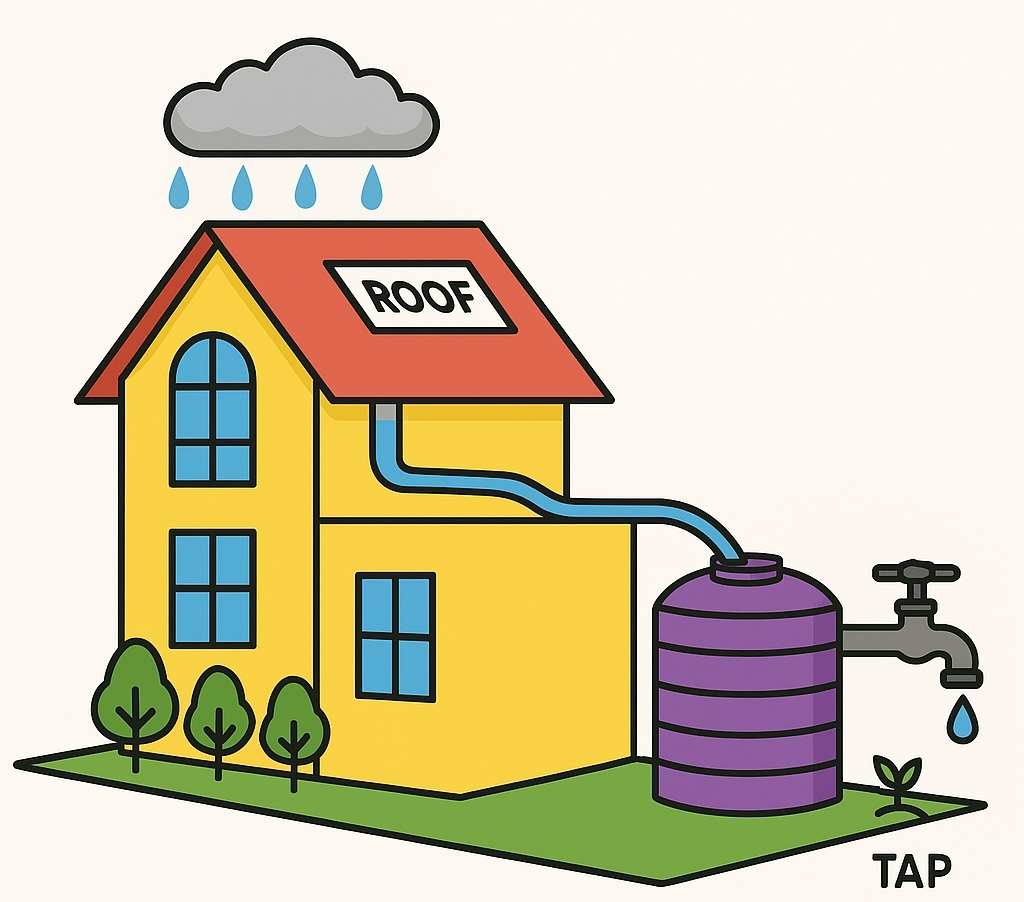
The rainwater harvesting system is one of the important science projects for kids, which integrates environmental science and teaches daily life. Using a cardboard roof, a few plastic funnels or straws, and a small storage tank, students can show how rainwater is collected and stored from rooftops for later use. The system is also simple to construct with easily available materials and has a cost of approximately ₹70 to ₹80.

This easy science experiment is excellent for classrooms and encourages students to practice sustainable living by explaining the benefits of rainwater harvesting and how it reduces water wastage, increases groundwater replenishment, and promotes water conservation.
9. Electric Car Model

One of the most popular science projects for high schoolers is the Electric Car Model, as it combines creativity with the application of basic engineering concepts. Using a DC motor, a pair of toy wheels, and a battery, students make a small car that drives when the switch is activated. The entire assembly can be built using cardboard and some basic wiring for about ₹90 to ₹100.
This science experiment working model demonstrates the conversion of electrical energy to mechanical energy using a motor. It also helps students understand the concept of electric vehicles, how motion is generated by power stored in a battery, thus encouraging them to think about clean, eco-friendly, and sustainable means of transport.
10. Lemon Battery

The Lemon Battery is one of the most simple science experiments that showcases the generation of electricity through chemistry. When a copper and a zinc nail is placed inside a lemon and connected with a wire, the lemon’s citric acid will act as an electrolyte. When zinc releases electrons during oxidation and copper gains them during reduction, an electric current is produced that is sufficient to power a small LED bulb.
Students can also understand the workings of batteries with this inexpensive science experiments working model, which costs only about ₹50 to ₹60. This is the process used in real batteries. This is one of the finest science projects for children to learn about electrochemical reactions because it is inexpensive, safe, and eye-catching.
Learning Beyond the Classroom
Each one of these simple classroom science experiments creates new knowledge from the theories in the textbooks. They fuel the curiosity, critical thinking, and collaborative skills necessary for students to learn in a worthwhile way.
Incorporating simple working models for science exhibitions also allows students to visualize scientific concepts and actively engage with experiments.
Varthana partners with affordable private schools to equip teachers with resources like a science lab and training to plan for school fairs, simple science experiment worksheets, and to weave experiential learning into daily instruction. The goal is simple: to make science enjoyable, accessible, and meaningful.
Conclusion
Encouraging curiosity, critical thinking, and problem-solving is the primary objective of science fairs; winning prizes for the best science experiments is secondary. In Varthana’s opinion and all positive experiences of science fairs, students of all ages realize science is ubiquitous as they observe, experiment, and pose questions.
Integrating simple science experiments, highlighting the finest innovations for science exhibitions, and assisting students in developing science experiments, working model projects, and science experiment activities helps in the transformation. Contact us at Varthana to inspire the next generation of innovators and change agents in India.
Also Read:
FAQs
-
What are some quick and simple science experiments kids can do at home?
There are many simple science experiments that children can safely try at home using basic materials. Classic examples include the volcano eruption (baking soda and vinegar reaction), the lemon battery, or the walking water experiment using colored water and paper towels. These projects help kids understand real scientific ideas like chemical reactions, capillary action, and electricity, all through play and observation.
-
How can I make a science project more interactive and fun for visitors?
To make your school science experiments more engaging, allow visitors to interact with the setup. For example, in a wind energy turbine model, let them blow air on the blades to see the LED light up. Use posters, labels, and short explanations that invite curiosity rather than long text. Keep the tone friendly, think of it as showing a story instead of delivering a lecture. Adding a “try it yourself” element instantly makes any project memorable.
-
Are there any safe science experiments for high school students with limited resources?
Absolutely. Many of the best science experiments for kids and teenagers can be done with low-cost, safe materials. A solar water heater, hydraulic lift, or rainwater harvesting model can all be built with cardboard, plastic bottles, or syringes. These projects are perfect for preparation for science exhibitions, teaching essential scientific principles such as Pascal’s Law or renewable energy conversion without requiring lab chemicals or high-cost equipment.
-
How can I explain complex scientific concepts in simple words for a school fair?
Use comparisons and everyday examples. Instead of saying “electrochemical reaction,” you can say “a lemon battery works like a tiny power plant inside a fruit.” The key is to relate school science experiments to familiar experiences like cooking, cleaning, gardening, or even riding a bicycle. The simpler the words, the more people will understand and enjoy your project.
-
Can I use recycled materials for science experiments at the school exhibition?
Yes, and it’s encouraged. Using recycled or reusable items like plastic bottles, straws, cardboard, and cans not only makes your simple science experiments affordable but also eco-friendly. Projects such as drip irrigation systems or water filtration models work perfectly with upcycled materials, teaching students sustainability along with science.
-
What are some easy working model ideas related to simple science experiments?
Some easy working models include the electric car, hydraulic lift, air pollution absorber, solar water heater, and lemon battery. These models visually demonstrate scientific concepts like energy conversion, fluid pressure, and chemical reactions. Each is inexpensive, safe, and ideal for both classroom learning and school exhibitions.
-
What are the cheapest science project ideas for a science fair in school?
Some of the cheapest science fair ideas for school include a lemon battery, a hydraulic lift with syringes, and a rainwater harvesting model. These projects use simple, low-cost materials like cardboard, plastic bottles, and household items while teaching important scientific concepts.



Social