
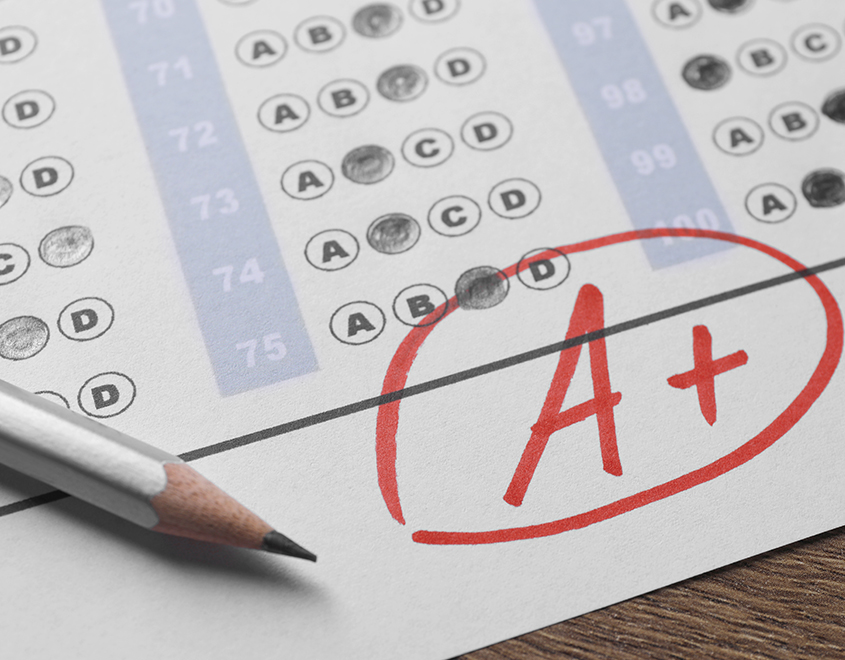
Examinations in India have evolved far beyond red marks on a report card. Today, the CBSE grading system represents a shift towards balanced evaluation, reduced stress, and meaningful learning. Instead of focusing only on numerical scores, CBSE uses grades to reflect a student’s overall academic performance and relative standing.
For students, parents, and school leaders associated with institutions supported by Varthana, understanding this system is important. This guide breaks down how CBSE evaluates students, how grades are awarded, and how marks are converted, helping you interpret results with clarity and confidence.
What Is a Grading System in Education?
To begin with, what is the grading system in education? A grading system is a structured method of evaluating student performance by categorising marks into predefined grades. Each grade represents a performance band rather than an exact score.
Unlike a pure marks-based approach that highlights minor differences, grading focuses on learning outcomes, consistency, and competence. Modern education boards prefer grading because it reduces unhealthy competition, supports conceptual understanding, and presents a fair comparison across diverse schools and regions.
Overview of the CBSE Grading System
The CBSE board follows both absolute and relative grading depending on the class and subject. Students are assessed through theory exams, internal assessments, and practicals where applicable.
For Class 10 and Class 12, grades are awarded using a 9-point scale. Relative grading is applied in subjects with large student populations, where grades are allotted based on rank order among passing candidates. This ensures fairness across schools, a principle that aligns well with Varthana’s mission of empowering affordable private schools across India.

CBSE Grading Scale (Grades According to Marks)
CBSE 9-Point Grading Scale Table
Understanding the CBSE grading scale helps decode report cards easily. Below is how CBSE grades according to marks are structured:
| Grade | Percentage Range | Grade Point | Result |
|---|---|---|---|
| A1 | 91 – 100% | 10 | Pass |
| A2 | 81 – 90% | 9 | Pass |
| B1 | 71 – 80% | 8 | Pass |
| B2 | 61 – 70% | 7 | Pass |
| C1 | 51 – 60% | 6 | Pass |
| C2 | 41 – 50% | 5 | Pass |
| D1 | 33 – 40% | 4 | Pass |
| E | Below 33% | – | Fail |
Grade Marks and Percentages in India
When discussing grade marks and percentages in India, CBSE grades are often translated into approximate percentage ranges. While grades do not show exact marks, they help institutions and parents understand performance levels without encouraging unhealthy comparisons.
CBSE Grade Conversion – Marks to Grades
How Marks Are Converted Into Grades
The process of grade conversion marks in CBSE follows these steps:
- Students are ranked based on marks obtained.
- Passed candidates are divided into equal segments.
- Grades from A1 to D1 are allotted based on relative performance.
This method ensures that grading reflects both achievement and competition level.
CGPA Calculation Formula in CBSE
CBSE also uses CGPA or Cumulative Grade Point Average. To calculate it:
- Add grade points of the five main subjects.
- Divide the total by five.
For example, if the grade point total is 45, the CGPA is 9. To convert CGPA to a percentage, multiply by 9.5. This conversion is widely accepted by institutions and lenders working with Varthana.
CBSE 12th Grading System Explained
The CBSE 12th grading system plays a crucial role in higher education decisions. Students are evaluated through:
- Theory exams that carry major weightage
- Practical exams for science and vocational subjects
- Internal assessments, including projects and assignments
A minimum of 33 percent is required separately in theory and practicals. Grades obtained in Class 12 are often considered for college admissions, scholarships, and education financing decisions, making accurate interpretation important for families planning ahead with Varthana.
Meaning of Each CBSE Grade
1. What Does A2 Grade Mean?
Many parents ask what A2 grade means. An A2 grade reflects excellent performance, typically within the 81 to 90 percent range. It indicates strong conceptual clarity and consistency across assessments.
2. What Does B1 Grade Mean?
B1 grade means very good performance, usually between 71 to 80 percent. Students in this category demonstrate sound understanding with scope for further improvement.
3. D1 Grade Percentage and Passing Criteria
The D1 grade percentage falls between 33 to 40 percent. This is the minimum passing grade in CBSE. Students securing D1 have met basic learning requirements but need academic support to strengthen fundamentals.
Grades According to Percentage – Student Examples
To understand grades according to percentage, consider these scenarios:
- A student scoring 75 percent is awarded a B1 grade.
- A student scoring 82 percent receives an A2 grade.
- A student scoring 91 percent achieves an A1 grade.
Such clarity helps parents and schools supported by Varthana set realistic academic goals and improvement strategies.
Also Read: English Project Ideas
Why CBSE Uses the Grading System
The CBSE grading framework offers several benefits:
- It reduces exam-related pressure by avoiding rank obsession.
- It encourages conceptual and skill-based learning.
- It ensures fair comparison across regions and school types.
This balanced approach complements Varthana’s vision of partnering in schools’ growth journeys, where learning outcomes matter more than mere numbers.
CBSE Grading System vs Other Indian Boards
CBSE differs from ICSE and many state boards in its structured grading and national uniformity. While some boards still rely heavily on percentages, CBSE’s grading provides flexibility and fairness, especially for students from affordable private schools across diverse geographies.
Supporting Holistic Education Beyond Grades
Grades alone do not define a child’s future. Schools play a critical role in shaping values, skills, and confidence. Academic performance combined with co-scholastic development creates well-rounded individuals.
This is why organisations like Varthana focus not just on financing but on empowering schools to deliver quality education through better infrastructure, resources, and holistic growth opportunities. By supporting schools through independent school financing, Varthana enables institutions to invest in learning environments that go beyond exam performance and nurture long-term student success.
Also Read: What is a School Uniform?
Conclusion
The CBSE grading system is more than an evaluation tool. It is a reflection of modern education principles that prioritise understanding over memorisation. By learning how grades, percentages, and CGPA work, parents and students can make informed academic decisions without unnecessary stress.
For schools and families connected with Varthana, understanding CBSE grades properly helps in planning academic progress, making informed infrastructure decisions, and supporting long-term educational goals.
FAQs
-
What is the grading system in CBSE?
It is a 9-point evaluation method that categorises student performance into grades instead of only marks.
-
ow many marks are required for an A1 grade?
A1 grade corresponds to scores between 91 and 100 percent.
-
Is CGPA still valid?
Yes, CGPA is still used and can be converted into percentage by multiplying by 9.5.
-
Can grades be converted back to marks?
Grades indicate a range of marks, but exact marks are not disclosed on CBSE report cards.



Social