
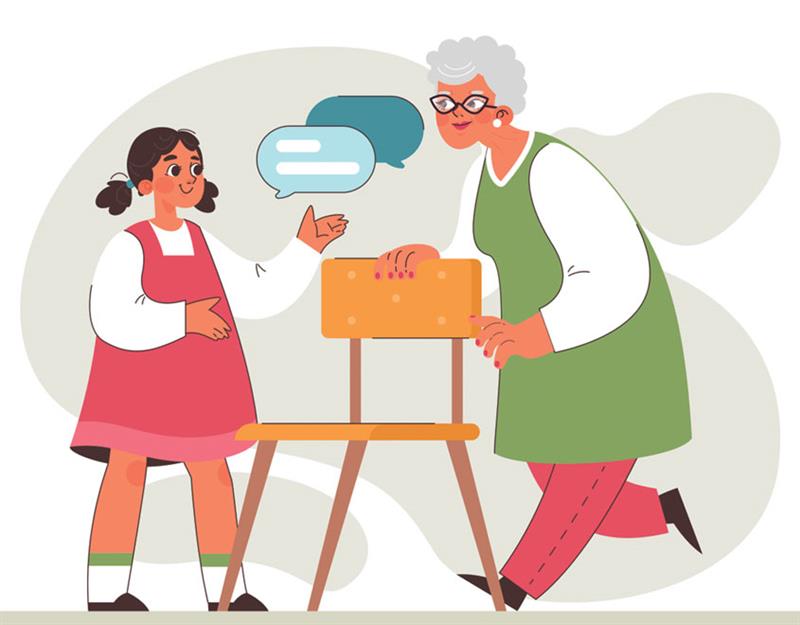
“I still remember the moment I truly understood what social etiquette meant. It was my school days – shy, curious, and carrying a school bag bigger than me.” – This is Pavan’s story and how he learned social etiquette in his school.
Pavan had just moved to Pune and joined Class One. On his first day, with a backpack almost his size and eyes full of curiosity, he stepped into a world of new rules, unfamiliar faces, and endless possibilities. What he didn’t know was that this very day would answer a question many children have: “What is social etiquette and why is it important?”
His teachers believed that teaching etiquette in schools wasn’t about strict rules – it was about building habits that nurture confidence, kindness, and respect. And Pavan was about to discover this in the simplest, sweetest way.
Also Read: How Schools Shape a Child’s Character and Perception of the World
Key Social Etiquette and Manners Children Must Learn from School
1. The Power of a Simple Phrase “Good Morning”
Pavan entered the classroom and saw his teacher greeting everyone. Ms. Diya smiled warmly at him and greeted “Good morning, Pavan!”
Pavan hesitated a bit but replied, “Good morning, ma’am.”
This small greeting introduced him to an important part of etiquette and manners. It shows respect and makes people feel valued. He realised this was one of the simplest forms of social etiquette.
2. Sharing Makes Friendships Bloom
The 10-minute snack break was all Pavan was waiting to enjoy. However, he had not yet made friends. Hence, he sat alone. He watched his two classmates fighting over a packet of chips. He picked his lunchbox and offered it to them, “You can have some of my snacks.” The boys immediately stopped fighting, stared at him, and with a smile accepted his offer. Soon, all three were eating together and sharing. Through this, Pavan learned a key part of social etiquette – that sharing builds trust.
Ms. Diya, who was observing, later explained, “This is why teaching etiquette in schools is important as children learn kindness through actions.”

3. Waiting for Your Turn
During playtime, Pavan rushed to the swings. Only to his dismay. A girl from his class was already enjoying the swing. He recalled his mother’s advice: “Being patient is also being polite.” He stepped back and waited patiently. The girl who had seen Pavan waiting did not extend her time and thanked Pavan for waiting with a smile on her face.
He felt proud. This was the real meaning of patience and respect in social etiquette for kids. This was Pavan’s real lesson in conversation manners. Knowing when to pause, wait, or listen.
4. Use “Please” and “Thank You”
During the class hours, Pavan needed an eraser as he couldn’t find his. Pavan approached his classmate and asked, “Could I please borrow an eraser?” His classmate Priya gave him the eraser since he used polite language and responded positively. While returning the eraser, he smiled and said, “Thank you, Priya!”
These words are part of daily etiquette and manners. Speaking politely and thoughtfully is an important part of conversation manners.
5. Keep Your Surroundings Clean
After art class, the desk was dirty with paint, glue, and paper. While many kids ignored, Pavan had seen his mother tidying his room. He took a moment to clean his desk. Seeing this, others joined him.
Ms. Diya appreciated him with pride and added, “Responsibilities like these are part of teaching etiquette in schools, which need not be guided, but you observe, and act to show care of shared spaces.
This taught Pavan that etiquette for kids is not just about words, but actions.
6. Respect Differences
During the language class, Mr Pranav, the English teacher, started a storytime. Students began sharing about their families, like different languages, traditions, and customs. Pavan listened patiently, without interrupting.
This conversation manner is another etiquette for kids – listening to others with full attention. It also helped him understand what social etiquette means: to respect differences and value everyone’s voice.
7. Apologise When You’re Wrong
The first day had come to an end. Pavan wanted to talk to his mother about the day in school. While packing his bag, he accidentally bumped into Rahul. Rahul dropped his books and Pavan immediately said, “I’m sorry.” Later he helped him pick them up. Rahul obliged and replied, “It’s okay.”
Pavan learned that apologizing is one of the most important aspects of social etiquette for kids.
Pavan’s Lesson for Every Child
On the way home, Pavan’s mother asked, “How was your first day? What did you learn?”
He smiled brightly and with pride. “I learned how to greet people, share, wait, listen, and say sorry. I even learned how to be good to others!”
His mother praised him and tapped his shoulder. “Schools help you become not just a smart student, but a good human being. They help children like you understand what is social etiquette and the importance of basic conversation manners.”
Take away
Pavan’s journey highlights that etiquette in schools shapes kids into being thoughtful, respectful, and empathetic. Understanding the term ‘what social etiquette means’ includes using polite words, listening carefully, respecting differences, keeping spaces clean, and showing kindness.
“That day I realised that social etiquette isn’t something that I can learn from a book. It was something I have to live, moment by moment,” Pavan replies, smiling.
Etiquette and manners become values that help children thrive in every conversation, every friendship, and every moment. Just like Pavan, every child deserves a learning environment that nurtures confidence, kindness, and essential life skills.
If your school wants to strengthen these 21st-century practices and align with NEP 2020, Varthana can support you with financial services and learning resources that enrich both teaching and student development.
Also Read: How to create a Culture of Achievement in your School and Classroom?
Also Read: Hidden Curriculum: The Unspoken Messages Students Learn in School
FAQs
-
At what age should children start learning social etiquette?
Children can start learning social etiquette at age three, when they begin understanding simple actions like sharing and greeting.
-
How can schools in India effectively teach etiquette to students?
By integrating daily routines, role-play activities, value-based learning, modelling respectful behaviour, using real-life scenarios, and creating consistent classroom practices.
-
What are simple conversation manners kids can practice daily?
It includes greeting politely, making eye contact, speaking softly, and responding with kindness.
-
How can parents correct bad manners without being harsh?
It becomes easier when parents stay calm, explain the impact of actions, and encourage children to try again.
-
Why is teaching digital etiquette important for kids today?
When they learn how to behave respectfully, responsibly, and safely on digital platforms, they are better prepared to protect themselves, build healthy relationships, and make good choices. It also helps prevent issues like cyberbullying, misinformation sharing, and misunderstandings.
-
How do cultural differences in India influence etiquette teaching?
Every region, language group, and community has its own traditions, values, and social norms. What is considered polite in one area may be different in another. Recognizing these differences helps ensure that etiquette teaching is more inclusive, sensitive, and meaningful for all students.



Social