
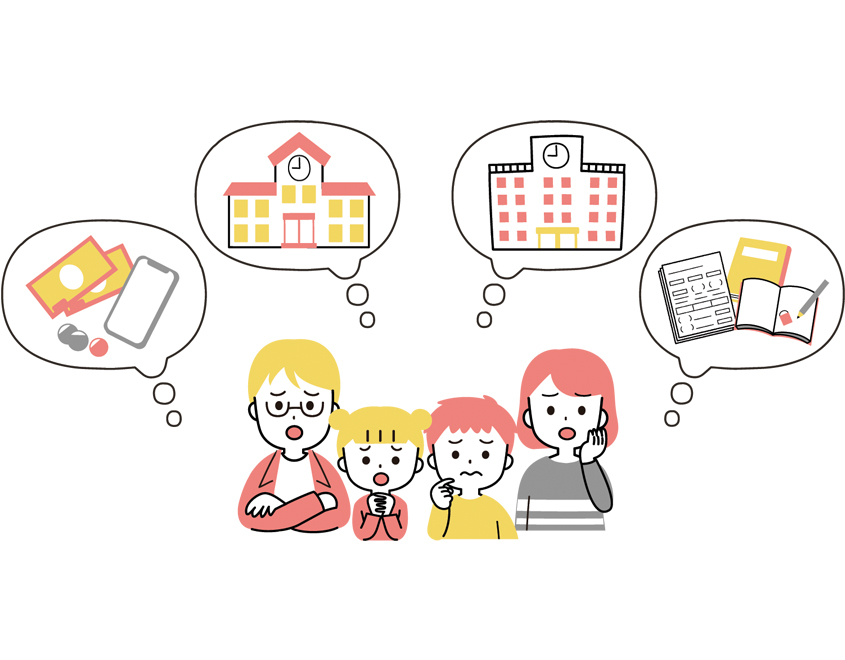
Is choosing a school about admissions? No, it’s choosing the environment that shapes a child’s thinking, confidence, and future. With many educational boards, teaching styles, and promises, parents feel overwhelmed.
When we raise a question on ‘How to choose a school for your child’, we need to consider that the right school can help a child:
- To develop curiosity and enjoy learning
- To learn collaboration, communication, and leadership
- To build self-esteem and emotional strength
- To unearth strengths beyond textbooks
- To feel safe to ask questions and make mistakes
A conflict between a child and a school environment can lead to stress, detachment, or less confidence – even when the school is popular or high-ranking.
Also Read: How to Choose the Right Loan for School Expansion Projects?
Key Factors To Consider When Choosing a School
While selecting a school, always consider the following pointers, as they can help the child in developing the essential skills required for their future:
1. Child-Centric Fit
Every child is unique.
Consider:
- Learning pace – Is the child fast, average, or needs support?
- Personality – Is the child quiet, expressive, or highly active?
- Interests – Is the child into arts, sports, academics, or exploration?
Example:
A curious child may thrive in discussion-based classrooms, while a silent child feels secure with structured routines.
2. Curriculum & Board Pattern
The curriculum has an effect on how your child learns.
Common Choices in India:
- CBSE – Structured, competitive exam-oriented
- ICSE – Language-rich, detailed syllabus
- State Boards – Regional relevance and affordability
- International Boards – Inquiry and concept-based learning
Ask:
- Is there a chance of changing cities?
- What exams or career paths are we considering?
- Does the board match the child’s learning capability?
3. Teaching Quality & Classroom Practices
Good teaching matters more than high-fi infrastructure.
Look For:
- Student participation and discussion
- Concept clarity above rote memorisation
- Teachers encouraging questions
- Project-based or experiential learning
While visiting schools, ask, “How do teachers support children who learn differently?”
4. Safety, Well-being & Emotional Support
A child cannot learn if they don’t feel safe and supported in a school environment.
Essential Checks:
- Are there policies on anti-bullying?
- Are there trained counselors or mentors?
- Are there clear child protection guidelines?
- Is there open communication with parents?
Red Flag when:
If schools avoid discussing emotional well-being or discipline practices.
Read More: What is the Role of School Leaders in Promoting Mental Health and Wellness at School?
5. Exposure To Co-curricular & Life Skills
Education goes beyond marks.
Check For:
- Sports and physical education
- Arts, music, drama, clubs
- Leadership roles (assemblies, student councils)
- Life skills and values education
Does it matter:
Absolutely! These experiences build children’s confidence, teamwork, and resilience.
6. School Fee Structure & Transparency
The higher the fees, the better the education? It doesn’t always mean better education.
Hence, consider the total cost:
- Tuition fees
- Uniforms and books
- Transport and activity charges
- Annual increments
Smart Question:
“What learning outcomes does the school display to justify this cost?”
7. Location, Commute & Daily Routine
A long commute can quietly affect learning and mood.
Evaluate:
- Travel time and safety
- School timings
- Transport supervision
If institutions are planning to expand classrooms, school buildings, and transportation, consider opting for a loan for school. One notable provider is Varthana, a finance company focused on supporting affordable private schools.

Research On School Choice By Indian Parents
A study conducted by Azim Premji Foundation found that parents’ expectations – especially about English-medium education and teaching quality – often do not match reality. School choice is shaped not only by ideas of “quality education” but also by social and cultural aspirations. The report warns that limited and unclear information can lead parents to make decisions where real learning outcomes are overlooked or even harmed.
Also Read: Tips for Managing Stage Fright before a Presentation
Step-by-Step Guide to Choosing the Right School
To avoid confusion when selecting a school, here are some school selection tips for choosing the right school.
Step 1: Define Your Priorities
Write down what matters the most for the child. Is it:
- Teaching style
- Safety
- Budget
- Distance
- Curriculum
Step 2: Shortlist 3–5 Schools
Avoid comparing too many schools, as it can confuse.
Tip is to include one:
- Practical option
- Aspirational option
Step 3: Visit the School
Never skip when visiting the school. Observe:
- Classroom atmosphere
- Teacher-student interaction
- Cleanliness and safety
- Student behaviour
Step 4: Talk to Current Parents
Their experiences reveal realities beyond brochures.
Ask About:
- Teacher responsiveness
- Academic pressure
- Communication with parents
- Child happiness
Step 5: Ask the Right Questions
Instead of “How are the results?”, ask:
- “How do you support slow learner students?”
- “How do you raise concerns about bullying or conflicts?”
- “How do you encourage independent thinking in students?”
Step 6: Review Policies Carefully
Check:
- Assessment methods
- Promotion policies
- Homework load
- Discipline approach
Step 7: Involve Your Child
Ask age-appropriate questions, like:
- “How did you feel there?”
- “Did you like the classrooms and teachers?”
Also Read: What is Quality Education?
Conclusion
There is no single “best school”. There is choosing the right school for a child – one that supports learning, emotional growth, and confidence.
If you are looking for a new school, the pointers shared in the ‘key factors to consider when choosing a school’ can help you decide. A right choice today can shape not just academic success, but a happy, curious, and capable learner for life.
FAQs
-
How early should I start looking for the right school?
At least 6–12 months before admissions open, so you have enough time to research schools, visit schools, and make a calm, informed decision.
-
What documents are generally required during school admission?
Documents such as:
- Child’s birth certificate
- Aadhaar card
- Previous school records or report cards
- Transfer certificate
- Passport-size photographs
- Address proof of parents
-
Can I change my child's school if it's not a good fit? How to do it smoothly?
Yes, you can change your child’s school if it’s not the right fit.
How to do it smoothly:
- Understand the reason – Is it academics, teaching style, safety, or emotional well-being
- Talk to your child and understand their feelings
- Shortlist suitable schools that match your child’s needs
- Check admission timelines and seat availability
- Collect required documents (Transfer Certificate, report cards, ID proofs)
- Plan the transition at the end of the term or academic year, if possible.
- Support adjustment by staying in touch with teachers of the new school and giving your child time to settle
-
Are international boards like IB or Cambridge better than Indian boards?
Choose the board that best matches your child’s learning style, future plans, and family’s practical needs.
- International Baccalaureate (IB) and Cambridge Assessment International Education focus on inquiry-based learning, critical thinking, and global exposure. They suit families who may relocate internationally or prefer flexible, concept-driven learning.
- Indian boards (CBSE, ICSE, State Boards) are more structured, affordable, and closely aligned with higher education and entrance exams.
-
What financial options are available to help pay school fees?
- Personal Savings - Paying from regular savings or education funds.
- Flexible Fee Plans - Some schools offer installment or monthly payment plans to spread costs.
- Education Loans - Banks and NBFCs offer education loans specifically for school fees and related expenses.
- Scholarships & Discounts - Some schools provide merit or need-based scholarships, sibling discounts, or early-payment rebates.
- Employer Assistance - Some companies offer education allowances or fee support as part of employee benefits.
- Peer-to-Peer or Fintech Credit - Short-term credit options from fintech lenders with flexible repayment (use cautiously and compare costs).
-
How important are school rankings when choosing a school?
School rankings can be useful as a reference, but they should not be the deciding factor when choosing a school. Use rankings as a starting point, but give more importance to teaching approach, school culture, safety, and your child’s comfort and growth.



Social