
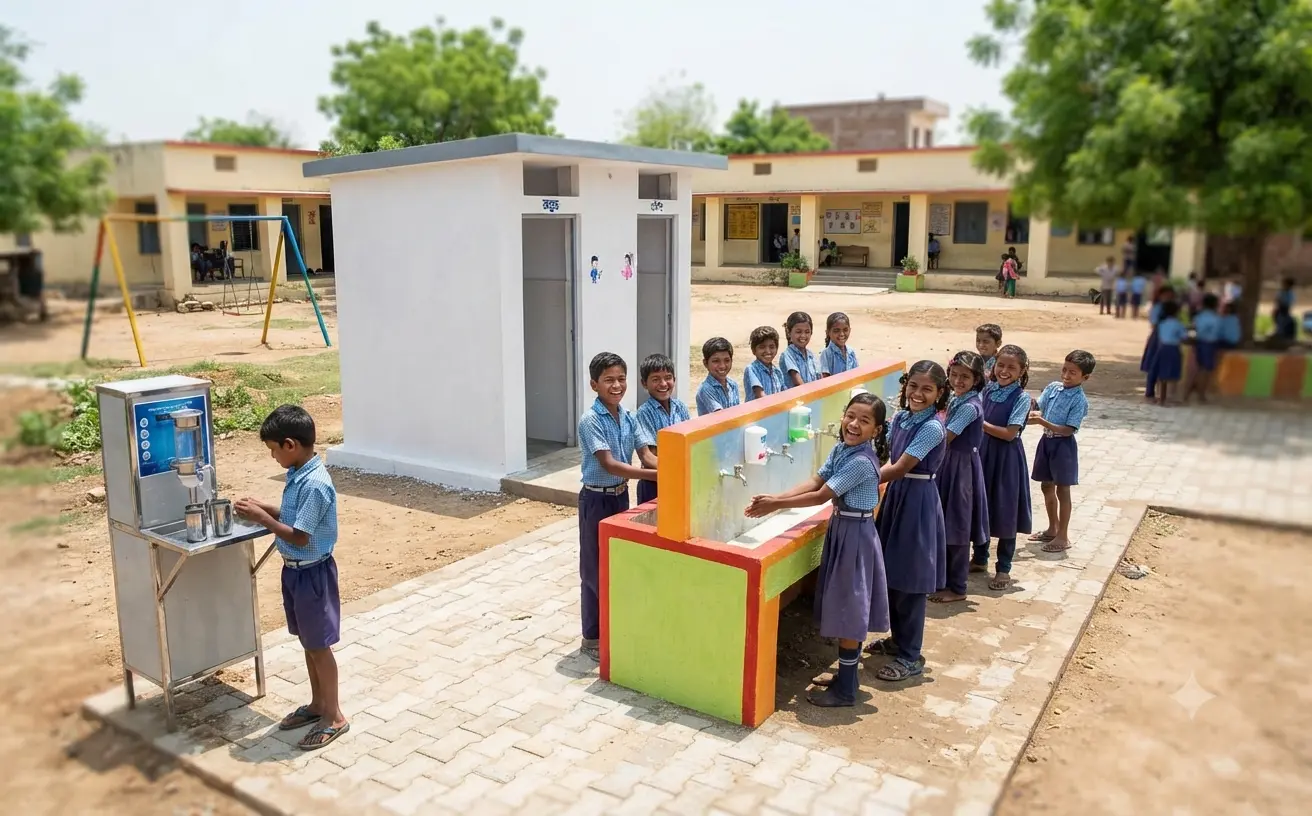
A school’s infrastructure is not limited to classrooms, laboratories and playgrounds. Clean toilets, safe drinking water and proper handwashing facilities are just as important to a student’s day at school. When these facilities are poorly maintained or inadequate, they can affect student comfort, hygiene and the overall learning environment.
Upgrading Water, Sanitation and Hygiene (WASH) facilities in schools often means more than repairing existing toilets. Schools may need to install new toilet blocks, improve plumbing, set up safe drinking water systems or upgrade waste disposal arrangements.
Understanding the Right to Education (RTE) infrastructure requirements for schools, assessing existing facilities and exploring suitable financing options can help school administrators plan these improvements. Here is what schools need to know about sanitation standards, upgrade costs and available funding options.
Why School Sanitation and WASH Facilities Matter
WASH facilities are basic practices needed to keep schools clean and healthy. These include safe drinking water, functional toilets, handwashing stations and proper waste disposal.
Well-maintained school sanitation facilities serve several purposes:
- Support student hygiene: Access to clean water, soap and functional toilets helps students maintain basic hygiene throughout the school day.
- Improve comfort and privacy: Clean, separate toilets give students a suitable space to attend to their personal needs.
- Support girls’ participation: Private toilets and menstrual hygiene facilities can help girls manage their periods with greater comfort and dignity.
- Create a better learning environment: Students should be able to access basic sanitation without leaving school premises or disrupting their classes.
India has made progress in improving basic school infrastructure. 99.3% of schools have drinking water facilities, while 97.3% have girls’ toilets and 96.2% have boys’ toilets. Handwashing facilities are available in 95.9% of schools. These figures highlight the progress made as well as the need to maintain and improve existing WASH facilities in schools.
What Are the RTE Infrastructure Requirements for Schools?
The Right of Children to Free and Compulsory Education (RTE) Act, 2009 sets out infrastructure standards for schools covered by the Act. These are norms that include specific provisions for toilets, drinking water and accessibility.
Under these standards, a school building must provide:
- Separate school toilet facilities for boys and girls: Schools must have separate toilet facilities for male and female students.
- Safe and adequate drinking water: Every child must have access to safe and sufficient drinking water at school.
- Barrier-free access: School buildings must allow children with disabilities to access the premises and facilities.
These RTE infrastructure requirements for schools should be considered when planning new construction or renovations. School owners should also check their state’s RTE Rules and affiliation requirements, as these may include additional standards.
Essential School Sanitation Infrastructure Upgrades
Schools may not need a completely new sanitation block. While some may only need repairs, others may require extra facilities to meet the needs of a growing student population. Common upgrades include:
| Facility |
Possible upgrades |
| School toilet facilities | New toilet blocks, additional cubicles, plumbing repairs, working flush systems and accessible toilets |
| School drinking water facilities | Water storage tanks, filtration systems, drinking water points and water quality testing |
| Handwashing facilities | Wash basins, taps, soap dispensers and adequate drainage |
| Menstrual hygiene facilities | Private changing spaces, sanitary product access and appropriate waste disposal systems |
| Wastewater and drainage | Drainage repairs, septic tank maintenance and suitable sewage connections |
| Accessibility | Ramps, handrails and accessible toilet arrangements |
These upgrades are based on the sanitation, drinking water, hygiene, maintenance and accessibility provisions outlined in the Ministry of Education’s Swachh Vidyalaya guidelines and Samagra Shiksha framework. The specific improvements required will depend on each school’s existing infrastructure and condition.
Understanding School Sanitation Facility Costs
School sanitation facility costs depend on existing infrastructure, student strength and the work required. Expenses may include toilet construction or repairs, plumbing, water storage and filtration, drainage, accessible toilets and menstrual waste disposal. Schools should also budget for cleaning staff, soap, plumbing repairs and waste collection.
Before starting work, school owners should inspect existing facilities, identify the necessary improvements and obtain quotations from local contractors.
How Can Schools Finance Sanitation and WASH Upgrades?
Schools can consider different funding options based on the size of the project and their financial position.
- Use existing funds: Use available reserves for smaller upgrades, such as repairing plumbing, replacing taps or adding handwashing stations.
- Upgrade in phases: Prioritize essential toilet repairs and the school’s drinking water facilities access before taking up other improvements. This helps spread costs over time.
- Explore school infrastructure loans: For larger projects, schools can consider external financing for construction, restroom upgrades, plumbing and other eligible infrastructure work, depending on the lender’s terms.
How Varthana Can Support School Sanitation Improvements
Varthana offers secured and unsecured loans for eligible private schools looking to improve their infrastructure and facilities. The secured school loans can support larger projects such as constructing a new sanitation block or building classrooms. Its unsecured loan offerings can be used for eligible purchases and improvements, including building restrooms, according to the school’s eligibility and applicable loan terms.
The eligibility criteria differ for each loan type:
- Secured loans: Schools need at least 3 years of operations and 200+ students. Collateral is required
- Unsecured loans: Schools need at least 5 years of operations, 400+ students, owner-occupied premises and annual fee collections of at least ₹1 crore.
The approved amount, interest rate and repayment terms depend on eligibility and financial assessment.
Why Choose Varthana for School Sanitation Facilities?
Varthana offers education-focused financing with features designed to make school infrastructure upgrades easier to manage.
- Multiple collateral options: Choose from a range of collateral options when applying for a secured loan.
- Flexible EMI options: Structure repayments around your school’s cash flow and repayment capacity.
- Quick processing: Loan applications can be processed within 5-7 working days after submission of the required documents, subject to verification.
- Dedicated Relationship Manager: Get assistance with the application and documentation process, through to disbursement.
Clean toilets, safe drinking water and working handwashing stations are basic school requirements. But installing them is not enough. Schools must also keep these facilities clean, maintain them regularly and attend to repairs when needed.
By checking existing facilities, school owners can identify what is missing, estimate school sanitation facility costs and decide which upgrades to take up first. Proper planning and suitable financial support can help schools improve sanitation, provide accessible facilities and meet students’ daily needs.
Visit Varthana to learn more about the available school sanitation infrastructure loan options.
FAQs
-
Do private schools need to follow both RTE infrastructure norms and CBSE affiliation requirements?
Schools must comply with the requirements applicable to their recognition and affiliation. RTE norms cover schools within the Act's scope, while CBSE-affiliated schools must also meet the Board's infrastructure and sanitation requirements. -
Can schools get a loan specifically for upgrading school sanitation facilities?
Yes. Eligible schools can explore infrastructure financing to fund projects such as toilet construction, plumbing improvements, drinking water systems and other sanitation upgrades. -
What documents are generally required to apply for a school infrastructure loan?
Applicants generally need a completed application, recent photograph, KYC and address proofs, school registration certificate, 12 months of bank statements and collateral documents for secured loans. -
Can I get a school construction loan without collateral?
Yes. Varthana's unsecured loans require no property mortgage and are assessed on the basis of enrollment stability and fee collection history. Amounts are typically lower than secured loan products.





Social