

Imagine walking into a classroom where students don’t just listen – they interact. Are you wondering how this is possible? This is possible by exploring ideas on shared digital screens, solving problems collaboratively, and engaging in self learning. As a teacher, you are moving among students in the classroom while guiding them, encouraging questions, and praising every idea.
Is this not a dream of the future? Yes. But it’s already in occurrence. To make education more engaging, create a smart classroom – a learning space where everything comes together like technology, creativity, and collaboration.
Smart Classroom Definition
What is a smart class?
The smart classroom definition surpasses having gadgets in a classroom. It’s about using digital tools – interactive whiteboards, projectors, tablets, and digital information. Thus encouraging students to visualize and understand subjects better.
The smart classroom meaning is about connecting knowledge along with technology. This improves their understanding but also prepares them for modern competencies such as critical thinking, creativity, and collaboration.
Also Read: The role of digital education tools and platforms in promoting literacy skills
Concept Behind Smart Classroom
Why do some topics stay in students’ minds for longer, while other topics fade away the moment the bell rings? The smart classroom concept relies on one core principle – ‘Learning should adapt to the learner, not the other way around’.
Students in a smart classroom engage through interactive tools, videos, and digital experiments instead of passively listening to what the teacher explains. Here, they ask questions, cross-check options, and collaborate with peer students. You are a facilitator who sparks curiosity while helping students create their understanding.
What truly makes this model work? It is the mix of pedagogy, psychology, and technology to create a classroom where:
- Learning is interactive and visual
- Content is personalized and flexible
- Teachers gain insights into student performance instantly
- Students engage with concepts beyond the textbook

Evolution of the Smart Classroom Concept
The idea began in the late 20th century when computers and projectors were introduced into schools, primarily in developed countries. Over time, this has been transformed through advancements in the internet, multimedia tools, and interactive devices. Now that you know what is smart class, it’s clear that it’s more than technology.

As technology continues to shape education, initiatives like Varthana’s school support programs are helping schools across India accept this transformation by making smart classrooms more accessible and impactful even in semi-urban and rural settings.
Key Features of Smart Classroom
Here are the key features of smart classroom that make a classroom truly “smart”:
1. Interactive and Visual Learning

Classroom example: The lesson is on the human heart for the Class 7 Science subject. You project a 3D model on the smartboard. Students try to rotate it, zoom in on the chambers, and watch an animation of blood flow. This helps them understand the concept better than a fixed diagram in a textbook.
2. Collaborative Environment
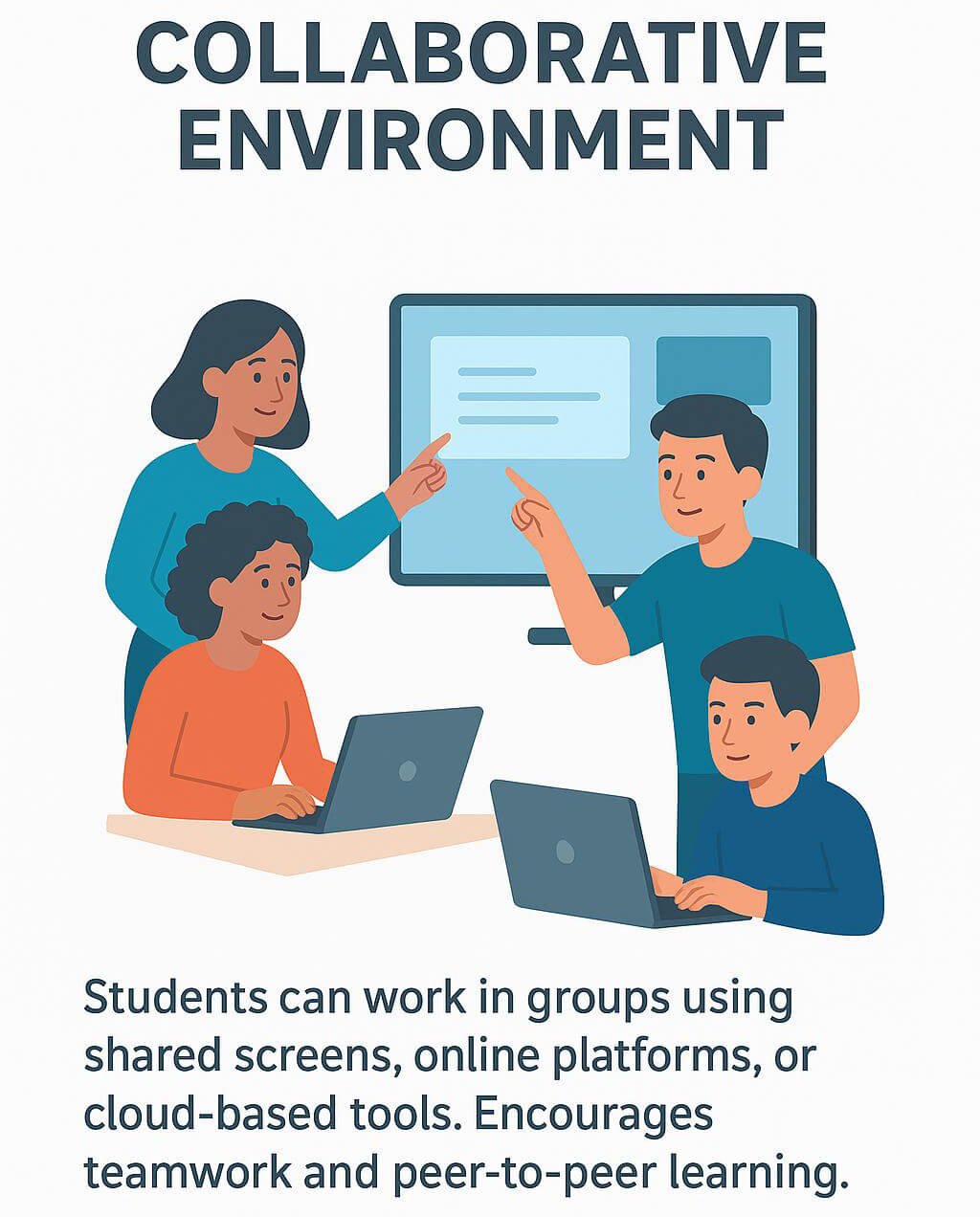
Classroom example: Students are given a project on renewable energy. They are divided into teams and use web-based tools to design and replicate solar-powered models. While doing this project, they share ideas, collectively plan, and present results using a smartboard.
3. Personalized Learning
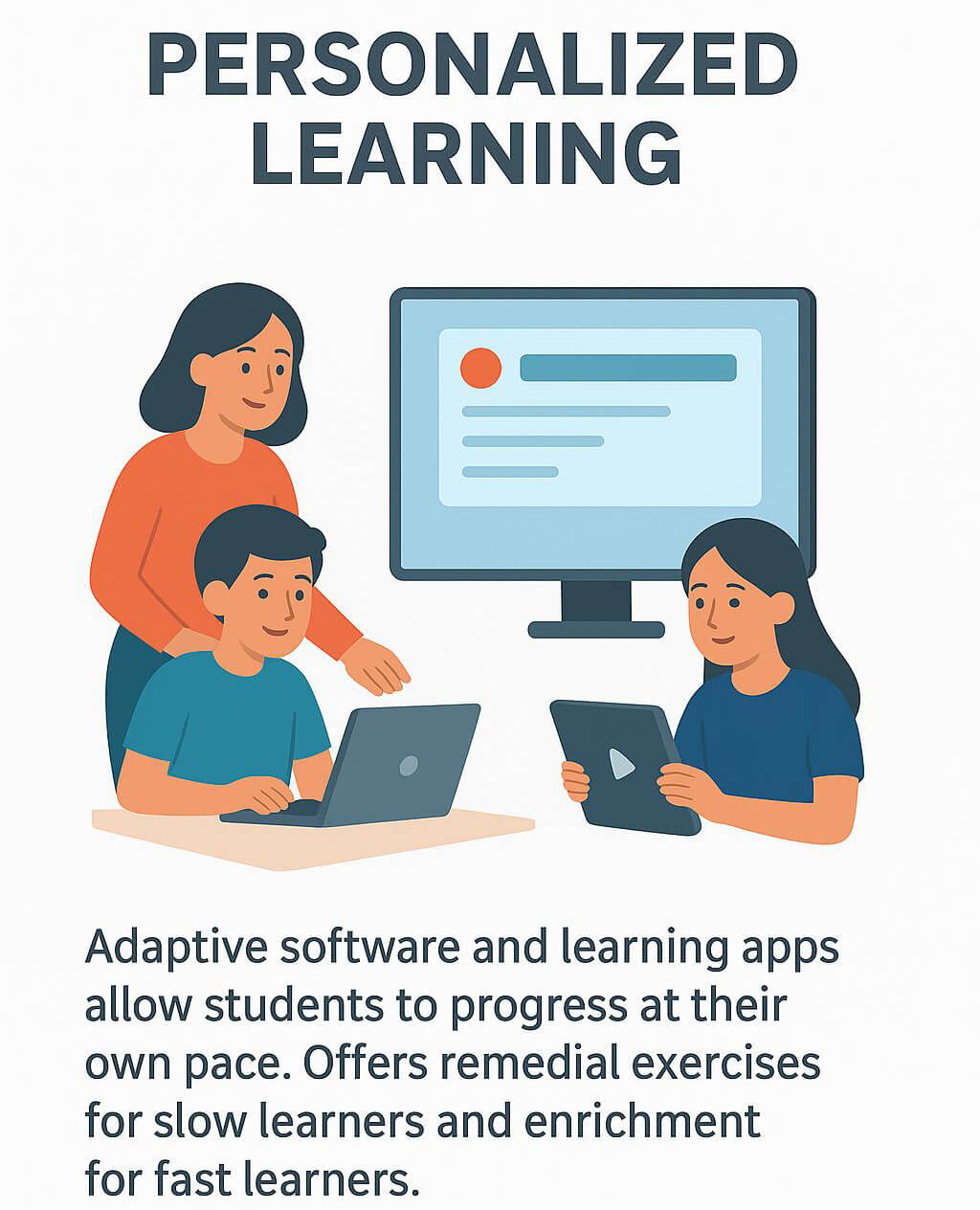
Classroom example: Use a tablet-based app for Math teaching which adjusts questions based on their performance. If a student is struggling with fractions, gets an opportunity to practice more. Whereas a fast learner goes on to more advanced problems.
4. Real-Time Feedback
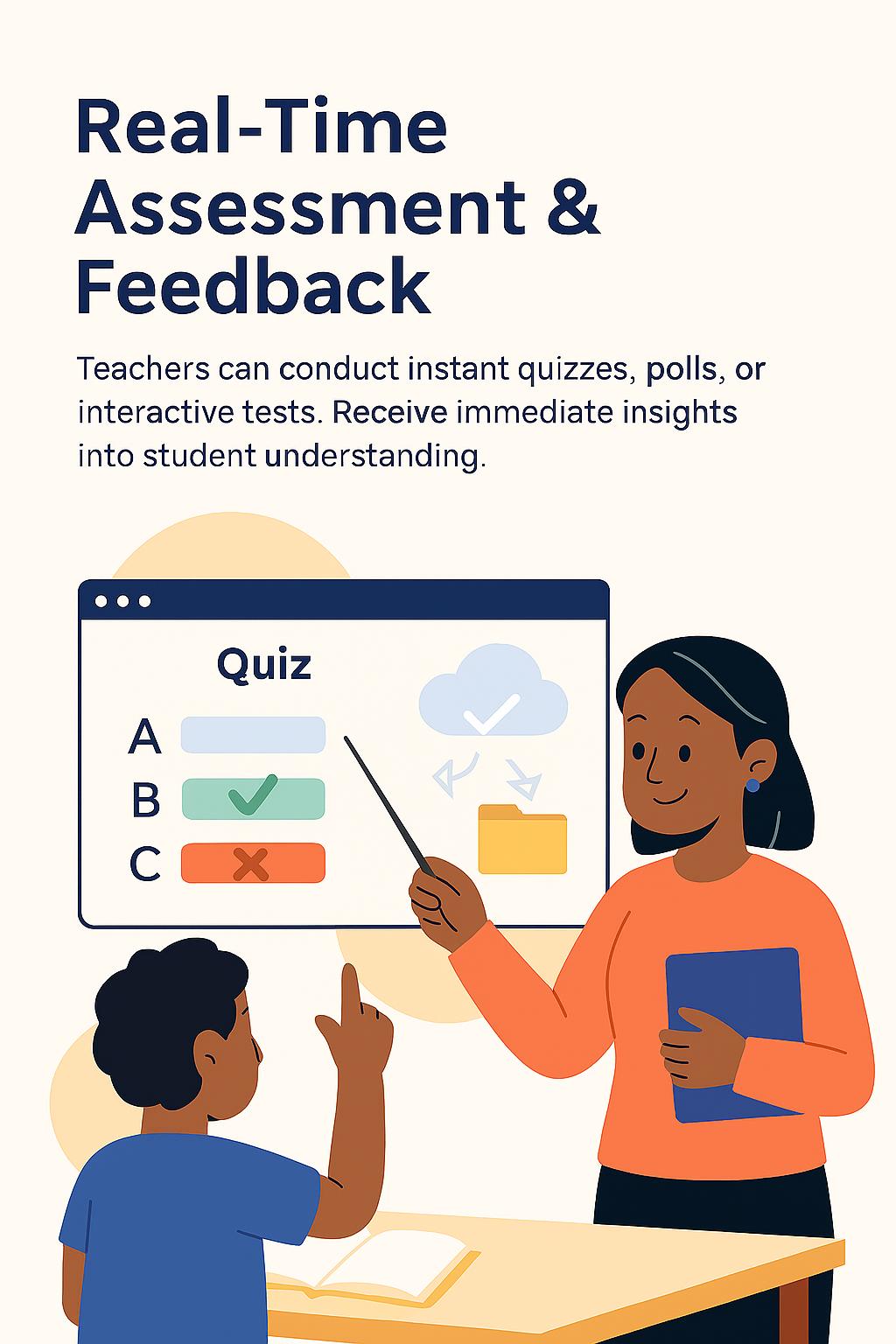
Classroom example: Instead of conducting an oral quiz, you can use an online polling tool. The results are seen immediately. This helps in identifying concepts that need to be revisited or adjusted.
5. Remote & Hybrid Learning

Classroom example: You can conduct lessons via video conferencing during vacation or an unforeseen situation. Thus helping students not getting detached from their subject and can submit assignments online, participate in polls, and join group discussions through breakout rooms.
6. Beyond Textbooks

Classroom example: While teaching the History topic of ancient civilisations, the students can research using online resources, collaboratively work together, and to present their findings through a video or slideshow. They can connect with abroad students to compare their thoughts and culture.
7. Engagement through Gamification

Classroom example: You can use an app while teaching a language, where students gain points for completing grammar exercises or writing short stories. Top performers get badges. This creates a friendly and competitive environment.
Advantages of Smart Classroom
The advantages of smart classroom go beyond comfort. They redefine learning itself.
- Teachers: They make lessons easier to explain and allow to give immediate feedback.
- Students: They make learning fun, interesting, and easier to understand.
- Schools: They help build a strong reputation, improve student learning results, attract parents, and prepare students for the digital world.
To support schools in setting up smart classrooms, Varthana is here for you. We help in enhancing teaching methodology, increasing student engagement, and connecting the urban-rural gap by supporting in improvement of school infrastructure.
The Bigger Picture
The National Education Policy (NEP) 2020 supports the vision of smart classroom concept. It coincides perfectly with the vision. What is this vision? Its main focus is on critical thinking, technology integration, and experiential learning. Thus, reducing the gap between the urban-rural and preparing students for the digital future.
Case study: Impact of Smart Classroom
Yamini Jyothsna Kambala and M. Ramakrishna at Rajanagaram Mandal, Andhra Pradesh – Conducted a study which was published on August 6, 2025 with participants of 100 students and 30 teachers.
- The research was on qualitative and quantitative methods to collect comprehensive insights on the benefits of smart classroom.
Key Findings:
- Student interest: The introduction of smart classrooms, students taking part more actively and showing greater interest in lessons.
- Teacher satisfaction: The study revealed that teachers found their work easier and more effective with better teaching tools.
- Some challenges: There are some problems that includes technical issues, a lack of teacher training, and limited infrastructure.
Suggestions:
To expand the benefits of smart classroom, there is a need for continuous teacher training, better technical support, and infrastructure development.
Read More: Importance of AI in Education: How Technology is Empowering Teachers
Conclusion
The smart classroom concept plays an important role for making learning active and inclusive. To understand the smart classroom meaning, it is a learning space that uses technology to make teaching more engaging and effective. It is not the number of devices a school has, but what matters the most is how well they are used. For a better understanding on how it can be integrated into the classroom, take the support of Varthana, who will be present in every step.
Don’t picture projectors and tablets when you hear the term smart classroom. It’s a space where learning is alive, interactive, and limitless.
FAQs
-
Can smart classrooms completely replace traditional classrooms?
No! Smart classrooms make traditional classrooms better by adding technology with the human touch of teaching.
-
What types of smart classrooms exist and how do they differ?
- Basic Smart Classrooms - Use digital tools to help teachers explain lessons effectively
- Interactive Smart Classrooms - Allow students to take part and work together.
- Hybrid Smart Classrooms - Mix in-person engagement with digital learning.
- Virtual Smart Classrooms - Let students learn online from anywhere.
- AI-Powered Smart Classrooms - Use smart tools to give each student personalised learning
- Immersive or AR/VR Smart Classrooms - Use of 3D and virtual reality in the classroom to make learning feel real
-
How costly is setting up a smart classroom in Indian schools?
The cost can ranges from ₹2 lakh – ₹10 lakh or more. It all depends on the technology, equipment and features a school wants to include. Depending on your requirement, NBFCs like Varthana come forward to support schools in setting up a smart classroom.
-
What are the essential equipment needed for a smart classroom?
- Interactive Whiteboard or Smartboard
- Projector or LED Display
- Computers or Laptops
- Tablets or Student Devices
- High-Speed Internet
- Audio System (Microphones and Speakers)
- Digital Content & Learning Apps
- Classroom Management Software
- Video Conferencing Tools
- AR/VR Equipment (Optional)
-
How does a smart classroom benefit teachers?
By simplifying teaching lessons, providing real-time student updates, and allowing more interactive and efficient teaching.
-
Are smart classrooms suitable for all student age groups?
Yes! Can be used for all ages i.e., from early childhood to higher education. The tools, lessons, and activities can be adjusted to match as per age requirements.
-
How can schools in rural areas implement smart classrooms with limited resources?
- Begin with one smartboard or projector
- Use shared tablets or laptops for group learning
- Preload videos and lessons offline
- Partner with NGOs or CSR programs to get support
- Train current teachers to use digital tools effectively instead of additional staff
- More devices and software can be added gradually as funds flow.
-
What financing options are available for schools to adopt smart classrooms?
- Government Schemes: Schemes like ‘Digital India’ or ‘Smart Schools Mission’ provide support.
- Bank Loans and Educational Finance: Banks offer loans for school infrastructure upgrades. One such organization is Varthana.
- Corporate Social Responsibility Partnerships: Companies can fund smart classroom projects as their CSR initiative.
- Vendor Financing: EdTech providers provide easy repayment and leasing options.
- Public-Private Partnerships (PPP): Collaborate with NGOs or private organisations to share implementation costs.
- Internal Funding: Use part of the annual budget to upgrade infrastructure gradually.



Social