
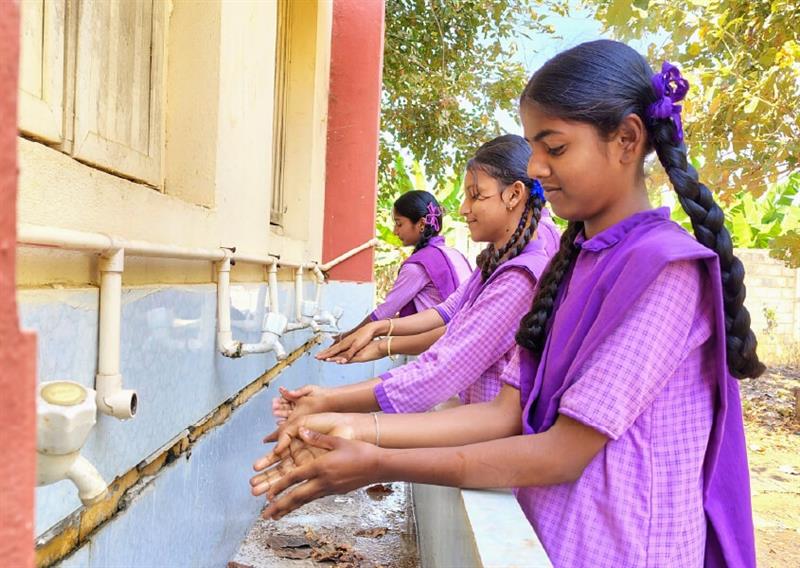
Introduction
All humans need water and sanitation to meet their basic needs. However, in many of the schools across India today, adequate and reliable access to clean drinking water and proper restroom facilities is often inconsistent. Students who attend schools without clean drinking water and proper restroom facilities will experience health problems, embarrassment, and barriers to learning. Providing WASH water sanitation, and hygiene services will improve health and reduce absenteeism while creating a more inclusive environment for all students.
The number of schools with adequate infrastructure has been increasing over time; however, functionality remains an area of concern. At the beginning of the year 2025, more than 1 in 4 schools (24%) in India still lack basic hygiene facilities, such as having access to soap and handwashing to maintain water sanitation and hygiene, despite the school reporting they have access to water and/or restrooms on paper. This discrepancy creates a continuing problem of addressing the gap between infrastructure and practical applications that lead to overall health & learning outcomes.
Understanding WASH: Water Sanitation and Hygiene in Schools
The full form of WASH stands for Water, Sanitation, and Hygiene. In schools, WASH might consist of not only providing access to safe drinking water, but also providing access to clean, usable toilets and facilities to support regular handwashing and personal hygiene.
While most schools in India have reported having water and toilets, the realities on the ground tell a different story. For example, while handwashing stations are supposed to have soap and water available, usually the water is not supplied regularly, so the soap and stations may go unused because of this, or sometimes even toilets are unusable for students during school hours, which creates a gap in water sanitation and hygiene service and also affects students’ ability to stay healthy and attend school regularly.
WASH is not simply a stand-alone initiative; it is a major component of creating a safe and inclusive learning environment where children can be free from illness or discomfort while they learn.

Defining the Components of WASH
Water: Access to safe drinking water and water for sanitation, hygiene, and cleaning.
Sanitation: Access to toilets and waste disposal that provide privacy, safety, and cleanliness.
Hygiene: Availability of facilities and education/training about proper handwashing practices to prevent the spread of illness.
All three of these components make up a healthy school environment.
The Critical Role of School Sanitation in Learning Environments
School sanitation encompasses more than just building toilet facilities. It also includes planning, maintenance, privacy, and safety.
When sanitation is inadequate, many students will not use the toilet facilities, resulting in discomfort and anxiety, which may detract from their ability to learn. The proper sanitation implementation for schools is intended to make toilets functional/safe/respectful of the needs of students, thereby encouraging regular use of toilets to reduce health problems and allow for better attendance.
Parents of students using clean toilet facilities will have confidence that the school is a safe place for their children, thus encouraging parents to support their children’s consistent learning.
Impact of Adequate Sanitation on Student Attendance
One of the primary causes of student absenteeism from school is inadequate sanitation, leading to illness. Various educators pointed out that students who frequently get sick will miss school frequently, therefore falling behind academically.
Many teachers have found that there is less absenteeism due to illness when there are reliable sanitation facilities; this continuity of education has a positive effect on long-term educational performance.
Read more – What is 21st Century Skills
Gender-Sensitive Sanitation Facilities for Girls’ Education
School sanitation is a vital aspect of education for adolescent girls, because without proper, private bathroom facilities or other assistance related to menstrual hygiene management, many girls will either drop out of attending school or harm their ability to participate in education.
Girls who are provided with gender-specific facilities and adequate water and sanitation support are more likely to remain in school and be active participants in their education.
Enhancing Educational Outcomes Through Water Implementation for Schools
Water implementation for schools is essential for use in the following: drinking, sanitation, hand-washing, and routine maintenance of facilities. Reliable access to water is required in order for good-quality sanitation facilities constructed to be usable.
Access to clean water due to reduced cases of water-borne disease provides students with good hygiene habits that promote health and well-being. Because schools with reliable access to water have fewer interruptions in service, students can concentrate on their studies rather than worrying about how to deal with the effects of being sick.
The access to clean water also contributes to maintaining clean classrooms and school grounds, which promote a healthy and positive learning environment.
The Power of Hygiene Implementation for Schools on Overall Well-being
Hygiene implementation for schools is the combination of physical infrastructure, educational awareness, and daily practice. Infrastructure alone will not make a positive impact if the students do not have an understanding of why hygiene is important.
Hygiene practices associated with water sanitation and hygiene have been shown to reduce the risk of disease and injury, increase attendance, and promote healthy school communities. When hygiene is integrated into the daily practice of schools, the effects can be felt in the home and the community as well as in the classroom.
Promoting Handwashing Practices and Disease Prevention
Regular handwashing using soap substantially decreases the transmission of infections such as diarrhoea and respiratory illness. Schools that enforce and encourage hand washing practices report fewer student absentee days, increased student participation, and improved learning outcomes.
Once these hygiene habits have been developed, they will continue to be utilized long after the student leaves school and will benefit the community as a whole.
Read more – Importance of Teachers
Conclusion
For a school to provide the best education, it needs a well-functioning infrastructure that supports learning every day. Having clean water, access to safe sanitation and toilets, functioning classrooms, and other essential facilities all contribute to the school’s overall experience for students. If students do not have access to water for drinking or washing, or have inadequate sanitation and hygiene, they will face health risks, more absenteeism, and have difficulties concentrating in class, which ultimately impacts their overall ability to learn. Varthana recognizes that school leaders want to create and maintain safe WASH water, sanitation, and hygiene environments where their children can learn.
Through its partnership with WaterEquity, which works to expand access to water and sanitation in underserved communities, Varthana supports schools in strengthening essential infrastructure through a school development loan. Connect with Varthana to begin upgrading your school’s core facilities.
FAQs
1. What does the acronym WASH stand for in the context of schools?
WASH stands for Water, Sanitation, and Hygiene. In schools, it refers to access to clean drinking water, safe and usable toilets, and daily hygiene practices such as handwashing that help create a healthy learning environment.
2. How do poor WASH facilities directly affect a child’s academic performance?
Poor WASH facilities lead to frequent illness, absenteeism, and difficulty concentrating in class. Over time, this disrupts learning continuity and reduces a child’s ability to keep up academically.
3. What are some low-cost ways schools can improve their WASH facilities?
Schools can start by ensuring regular cleaning of toilets, setting up simple handwashing stations, and maintaining safe drinking water storage. Small upgrades, when done consistently, can significantly improve daily hygiene conditions for students.
4. Does Varthana offer specific financial products for school WASH infrastructure?
Yes, Varthana supports schools through a school development loan that can be used to improve water, sanitation, and other essential infrastructure. Schools planning WASH-related upgrades can connect with Varthana to understand suitable financing options.
5. What resources are available for schools looking to implement better hygiene practices?
Schools can use government WASH guidelines, health department toolkits, and hygiene education materials designed for students. Partnering with organisations and financial institutions like Varthana can also help schools implement these practices more effectively.
6. How does improved WASH contribute to reducing dropout rates, especially for girls?
Access to clean toilets and water helps girls attend school consistently, particularly during adolescence. Improved WASH facilities reduce discomfort, health risks, and absenteeism, encouraging students to stay in school and continue their education.
Social