
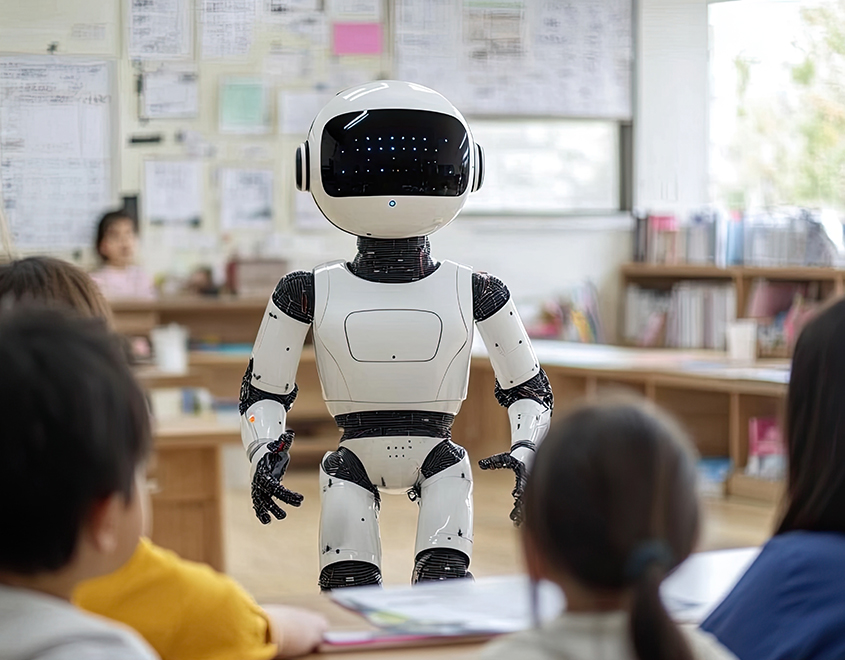
Artificial Intelligence in education exists beyond its previous status as a science fiction concept, which researchers used to study in advanced research facilities. The practice now exists as a typical element that people experience during their everyday activities and their current educational environment. The educational sector experiences AI implementation, which transforms student learning methods and teaching approaches, and school administrative work. The educational system of India receives support from AI, which generates personalized learning paths for students and improves teaching approaches and administrative work in schools.
What is AI in Education?
To understand how technology is changing classroom learning, it is helpful to first look at what AI actually means in an educational context. The AI full form in education is “Artificial Intelligence in education”, which enables digital systems to execute tasks that humans normally do through thinking activities, including information analysis, pattern recognition, and decision-making support. The educational sector uses this technology to create better teaching methods and improved learning spaces for students, and enhanced administrative systems for schools.
The impact of AI on education is clearly visible in how schools now use data-driven insights to support teaching and learning. The educational system utilizes artificial intelligence in education through data-driven analysis, enabling intelligent tools to monitor student learning activities and identify individual learning challenges, as well as the necessary support intensity. Teachers who observe students working with educational content can identify learning difficulties at an early stage and receive immediate support, which enables students to advance their learning. The system enables teachers to create classrooms that allow them to observe student requirements directly, rather than relying on general assumptions for their teaching methods.
AI exists as a separate entity from machine learning, although people often confuse these terms. AI represents the complete system, while machine learning functions as a specific AI capability that allows systems to acquire knowledge from data without requiring manual programming. Machine learning technology in educational settings enables platforms to enhance recommendation systems and forecast student achievement while developing individualised learning approaches through time-based adaptation.
AI functions as a support system for teachers through their work without changing their educational duties. The system enables teachers to perform their daily work more efficiently through reduced workload which allows them to develop personalized learning plans for their students.

How AI Helps in Education: Key Benefits and Applications
AI continues to make its presence known in educational settings because its impact grows stronger with each new day, which affects both classroom activities and school administration and digital learning environments. AI technology enables education through multiple essential applications which benefit modern educational systems.
1. Personalized Learning Experiences
No two students learn in the same way, and AI-powered learning platforms are designed with this reality in mind. These tools enable teachers to modify their teaching methods through observations of student performance and learning speed, and their reactions to different types of educational support. The system creates personalized learning routes which provide students who need help with math additional practice materials and visual explanations, but lets high-performing students learn at their own speed. The individualized teaching method enables students to fill their knowledge deficiencies while preventing them from facing obstacles because of standardized educational methods.
2. Intelligent Tutoring Systems
AI-powered tutoring systems function as individual student guides which provide students with instant feedback during their learning process. The tools adjust their explanations according to student answers while they also change the difficulty level and offer additional help when students require support. The AI tutors establish an environment which enables students who are shy to practice their speaking skills without feeling any pressure while they develop their confidence in subjects like mathematics, science and languages.
3. Automated Administrative Tasks
One of the less visible but highly valuable AI impacts on education is administrative automation. AI can assist schools by:
- Automating attendance and grading
- Scheduling classes efficiently
- Managing student records and reports
This reduces teachers’ administrative burden and allows them to spend more time on lesson planning and student engagement.
4. Accessibility and Inclusivity Enhancements
AI technology functions as an essential educational resource which enables all students to access learning opportunities. The educational tools speech-to-text and text-to-speech and reading assistants enable students who have hearing problems to better understand their lessons while students with visual or learning challenges receive assistance through these tools. Students who speak different languages can better understand each other through artificial intelligence-based language translation tools which operate using artificial intelligence. The support system provides essential value to India because it creates classrooms which become more inclusive for all students who speak different languages.
Read More: Top Toughest Exams in India
5. Data-Driven Insights for Educators
Teachers collect extensive data every school day by using tests and assignments and their regular classroom work with students. The system uses AI to analyze collected data which produces vital information that users can easily understand. AI technology enables teachers to detect student learning patterns and early indicators of learning challenges which allows them to deliver timely support and adjust their teaching approaches for better student results.
6. Enhanced Classroom Engagement
AI enables students to experience learning through its combination of game-based activities and virtual learning environments and interactive simulations which maintain their continuous participation. Scientists today possess the capability to conduct direct research about scientific procedures and past scientific occurrences. The interactive AI-based learning experiences create student interest while making educational content more accessible for students to learn and retain information better.
AI in Schools: The Indian Context
The Indian educational system implements AI technology through government-backed initiatives and private sector technological advancements which continue to grow in number. Digital classrooms and EdTech platforms and AI-powered learning applications have become more noticeable because of the recent emphasis on digital education.
The national initiatives of DIKSHA and National Digital Education Architecture (NDEAR) and NEP 2020 framework demonstrate how technology should support educational learning processes. The educational sector now sees private schools which offer affordable tuition rates using AI-based assessment systems and adaptive learning platforms and enhanced educational delivery methods for their students.
The Indian education system encounters various challenges which prevent artificial intelligence from functioning properly. The adoption of AI tools remains slow because students lack access to devices and reliable internet and their teachers do not receive proper training for these tools and rural and semi-urban areas face infrastructure challenges. The current difficulties present vital opportunities which will drive progress in the future. With targeted funding from Varthana – such as a Smart school technology loan – along with stronger teacher training and academic support systems, schools can adopt AI more effectively. The combination of specific funding with improved teacher training programs and educational support systems enables AI to achieve superior academic results for every student but delivers the most benefits to students who come from low-income families.
Also Read: Robots in Education: Fueling Innovation or Limiting Growth for the Next Generation?
Challenges and Ethical Considerations of AI in Education
AI technology in education produces beneficial results but educational organizations need to handle various critical matters which need complete assessment. Some of the key issues include:
- Student data protection: As more learning happens on digital platforms, safeguarding students’ personal information becomes critical. Schools require specific guidelines which describe the entire process of data acquisition and storage and application procedures.
- Fairness in AI systems: AI tools which lack proper design will create unintentional student group preferences between different student groups. The systems require scheduled inspections to maintain their balanced and inclusive operation.
- Access for all learners: The availability of devices and internet access differs between students. The current educational system will show greater existing learning gaps because AI-based learning systems need students to get proper support.
- Responsible use in classrooms: Students need direction about AI usage timing and methods which enable the tool to help their learning without taking away from their work or mental autonomy.
Education stands as the most essential human experience which exists above all else. Teachers’ judgment, empathy, and relationships with students cannot be replaced by technology. AI operates at its best when it runs as an invisible system which supports teachers to enhance student learning without making decisions about education.
Also Read: Illiteracy in India
The Future of AI in Education: Trends to Watch
The future of AI in education points toward deeper integration and smarter systems.
Emerging trends include:
- Generative AI for content creation and personalised assessments
- Natural Language Processing (NLP) for advanced language learning
- Virtual AI tutors available beyond classroom hours
- AI-powered teacher professional development
In India, AI is expected to play a critical role in lifelong learning, skill development, and teacher training – supporting the country’s evolving education ecosystem and workforce needs.
Frequently Asked Questions (FAQ)
1. What is AI in education and how does it work?
The educational system tracks student learning activities and their reactions to educational materials by using digital platforms which AI technology enables. AI systems use observed patterns to create new educational content which provides immediate feedback that helps teachers create improved teaching approaches.
2. How does AI personalize learning for students?
The educational system uses AI to analyze student performance and learning rate and specific challenges which enables the system to create individualized lesson plans. The system provides students with learning activities which include practice sessions and explanations and assessment methods that adapt to their personal educational requirements instead of using a standardized teaching method.
3. Is AI replacing teachers in schools?
No, AI is not a replacement for teachers. The system helps organizations decrease their daily work tasks while delivering vital information which supports analytical operations. Education depends on teachers to maintain their core position because they serve as mentors who guide students while providing emotional support.
4. How can Indian schools implement AI affordably?
Schools can start with low-cost EdTech tools, government-supported platforms, and partnerships that offer scalable AI solutions without heavy infrastructure investment.
5. What are the privacy risks of AI in education?
The main risks involve data misuse and lack of transparency. Schools must ensure strong data protection policies and responsible vendor selection.
6. How can AI help students with special needs?
AI-powered assistive tools provide speech support, adaptive content, and personalised learning paths, making education more inclusive and accessible.



Social